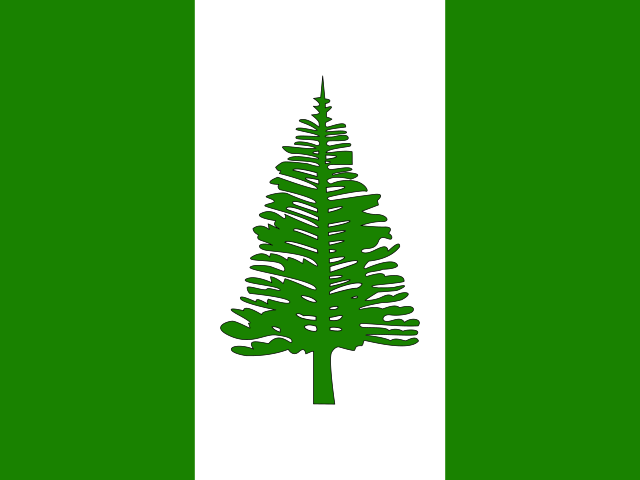
Norfolk Island: Descendants of the Bounty mutineers resettled this island in 1856.

Travel guide

Featured on September 18, 2026

Norfolk Island

Descendants of the Bounty mutineers resettled this island in 1856.

  • Kingston
  • Oceania
  • English

Places

Places to visit in Norfolk Island

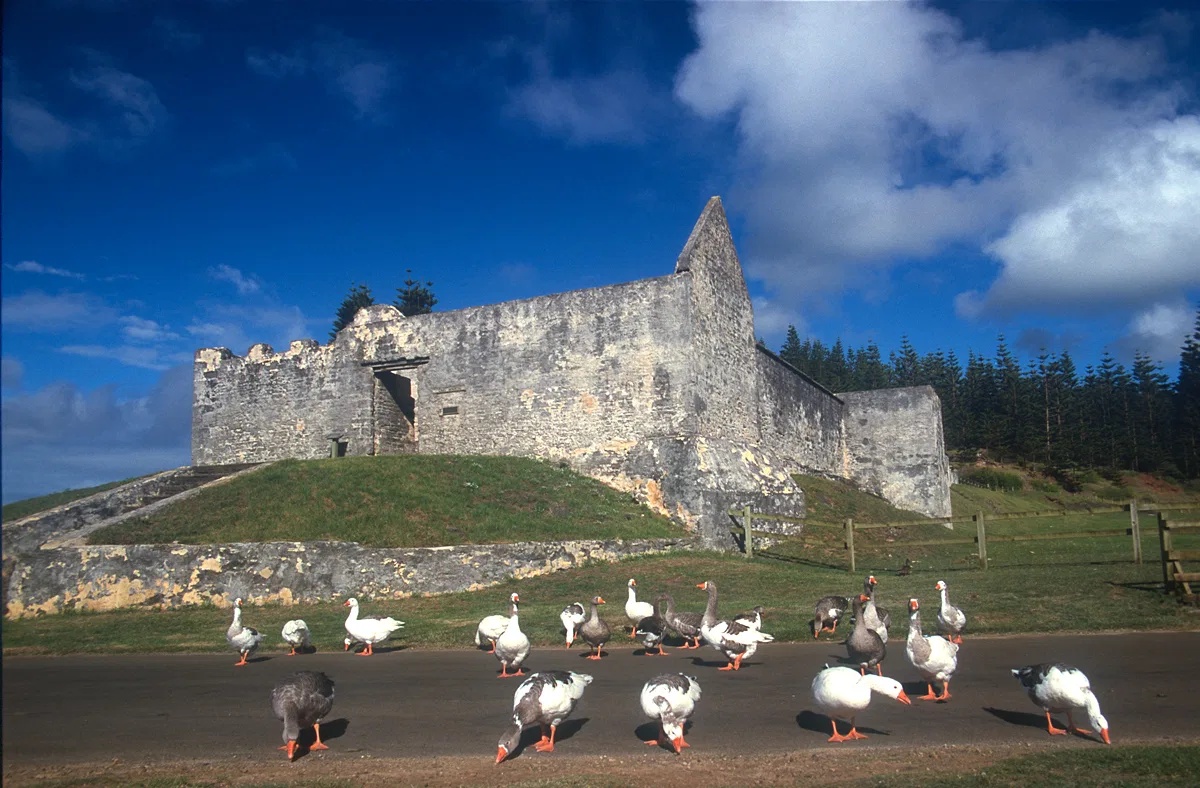
Kingston and Arthurs Vale Historic Area, Norfolk Island
History

Kingston and Arthurs Vale Historic Area

Steve Daggar · CC BY 3.0

This is the island's backbone: convict-era buildings on Quality Row, the old gaol, the cemetery, and a shoreline that makes the penal story feel immediate rather than museum-distant. You come to walk through the buildings, read the names on the graves, and understand how a prison outpost became a village.

Tip: Allow half a day; the museum ticket is worth paying for if you want the houses as well as the ruins.
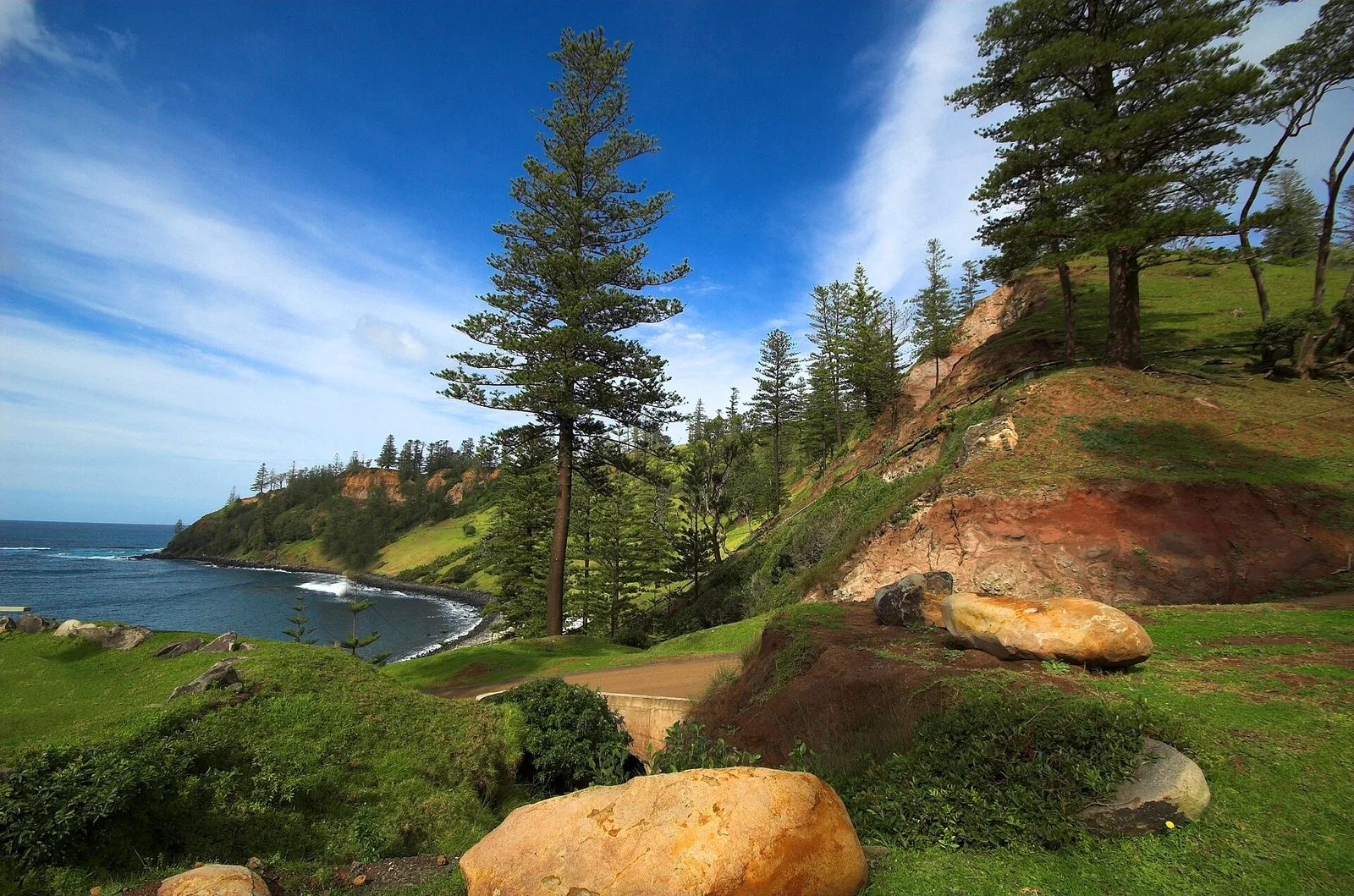
  • Norfolk Island National Park, Norfolk Island
    thinboyfatter · CC BY 2.0
    Nature

    Norfolk Island National Park

    The island's forest still holds the tall pines that first caught British attention, along with walking tracks, sea views and some of the last habitat for local birdlife. The lookouts from Mount Pitt give you the whole shape of the island at once; the longer walks show how quickly it turns quiet away from the roads.

    Tip: Go in the morning for the ridge walks; allow a couple of hours for the lookouts, longer if you continue on foot.

  • Emily Bay, Norfolk Island
    Inas · CC BY-SA 4.0
    Beach

    Emily Bay

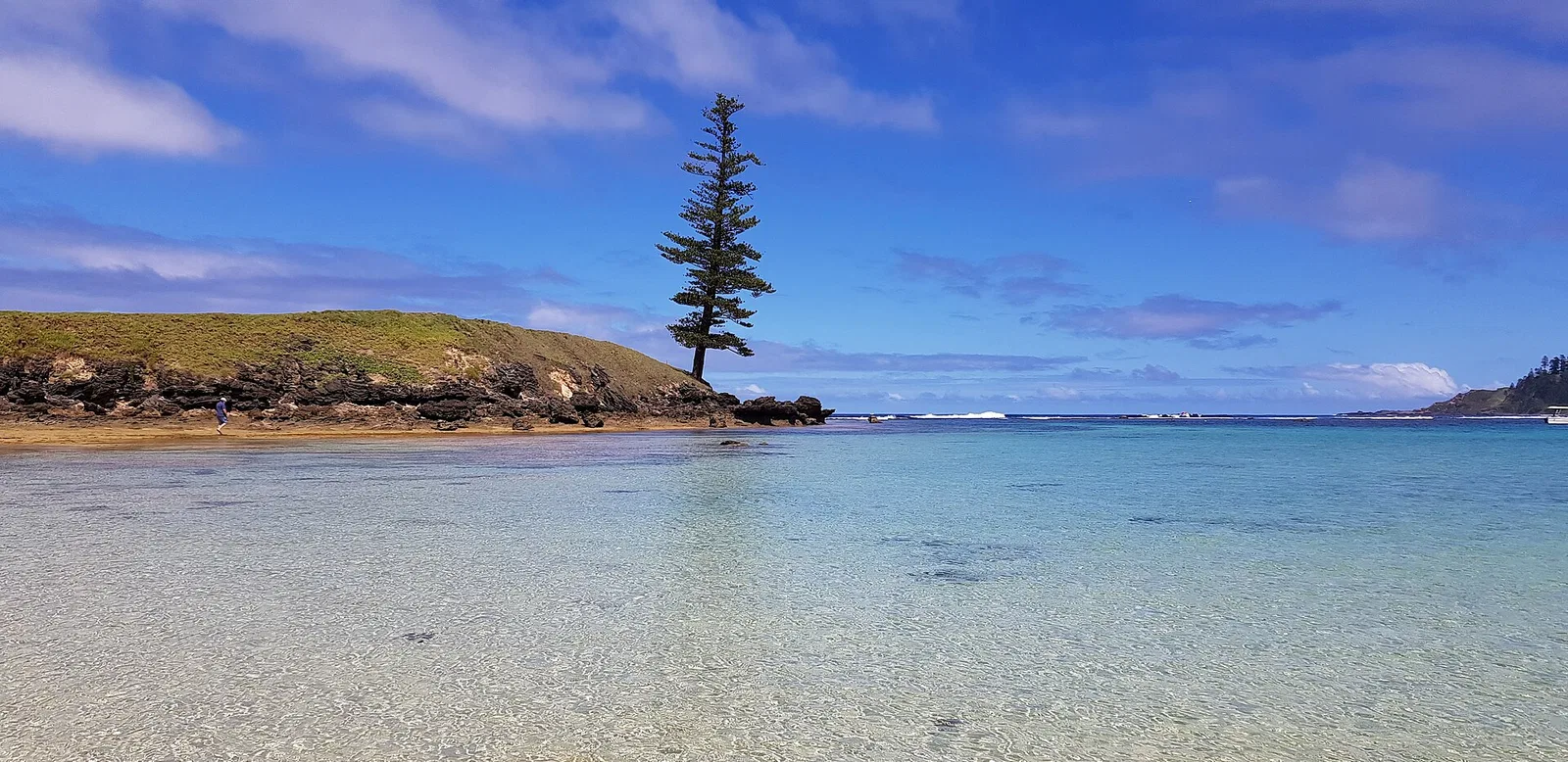
    This is the easy swim: a reef-sheltered lagoon with clear water, old jetty remains nearby and enough history in sight to make even a beach stop feel specific to the island. Come for a swim, a snorkel, or simply to watch the light change over Kingston.

    Tip: Best for a slow morning or sunset; bring reef shoes if you plan to wade far.

  • Anson Bay, Norfolk Island
    pen_ash · Pixabay Content License
    Adventure

    Anson Bay

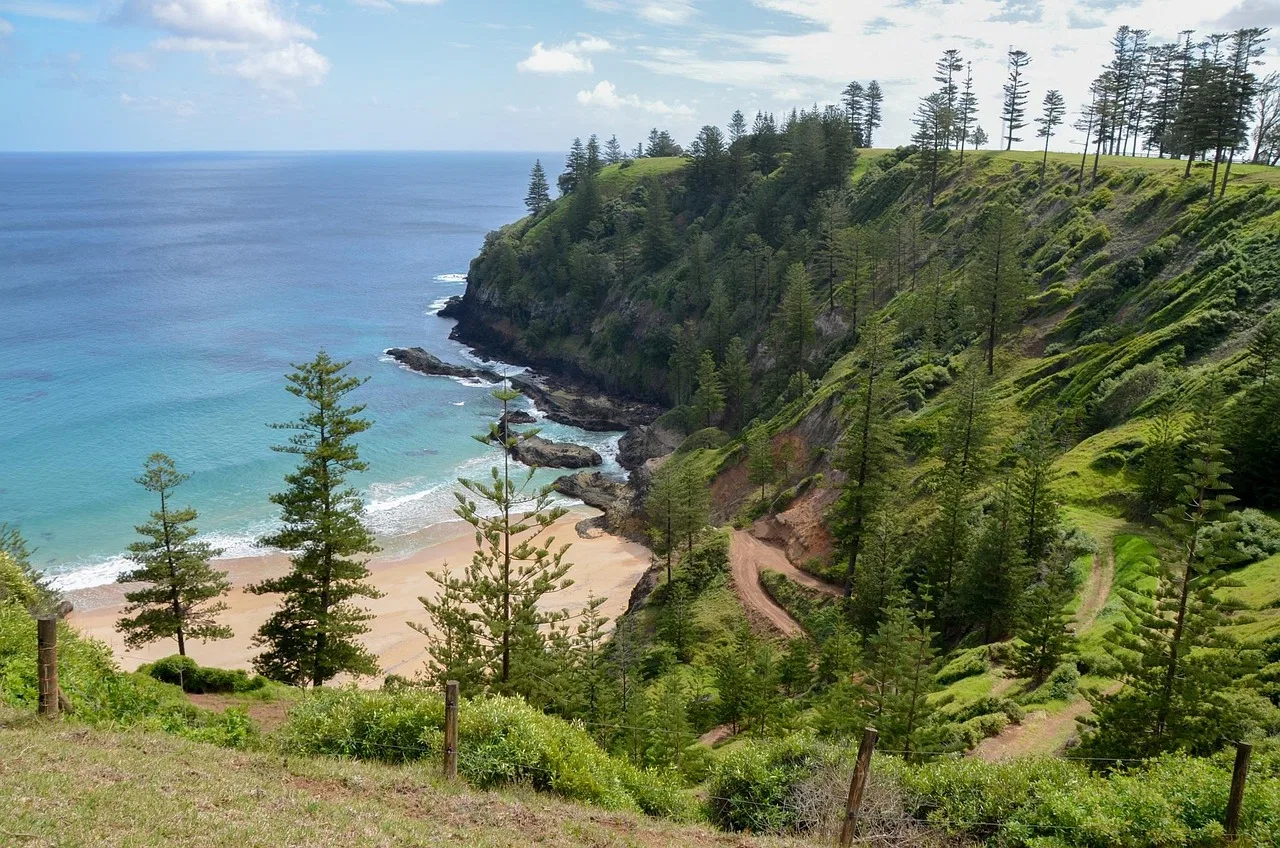
    The north coast feels wilder here. Even from the lookout the long sweep of beach and cliffs is worth the drive, and if you take the stairs down you get one of the island's best walks from farmland into surf country.

    Tip: Worth it even if you only do the lookout; if you take the stairs, save energy for the climb back.

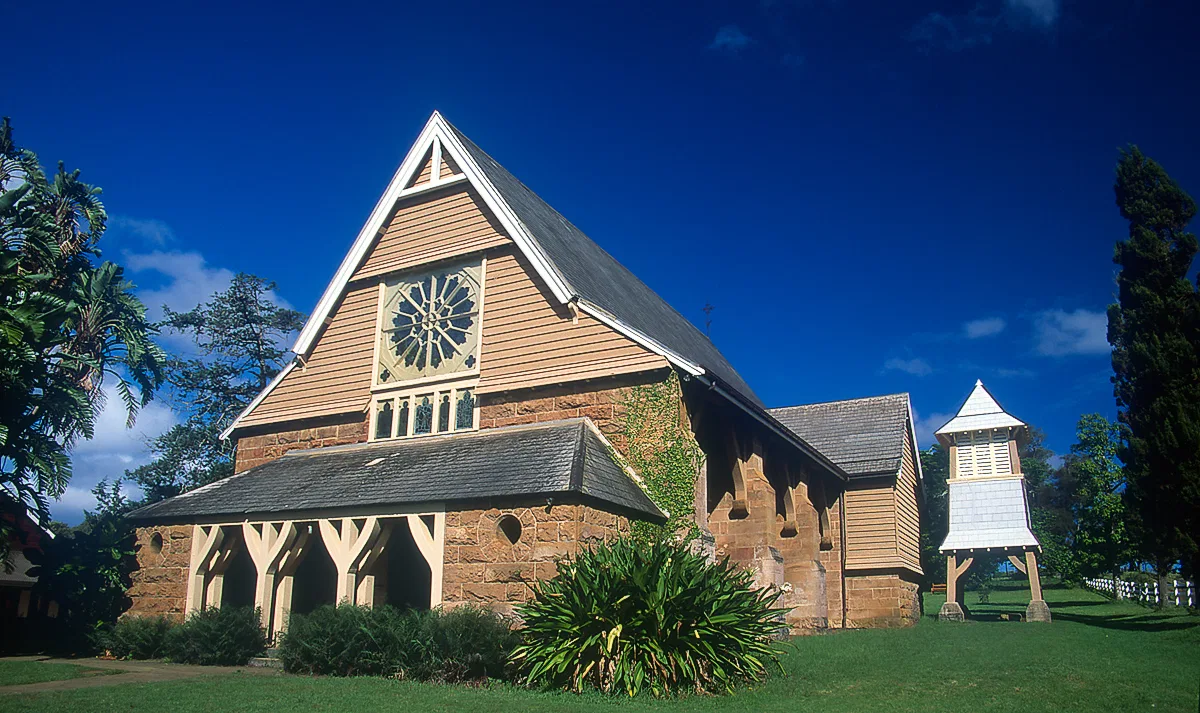
  • St Barnabas Chapel, Norfolk Island
    Steve Daggar · CC BY 3.0
    Culture

    St Barnabas Chapel

    Built for the Melanesian Mission, this chapel is one of the island's quieter surprises: carved wood, rich colour and a story that links Norfolk not just to Britain and Pitcairn, but to a wider Pacific world. It adds a different layer to a place often reduced to convicts and mutineers.

    Tip: Check opening times or visit with a guide; it is easiest to reach if you have a car.

Eat

What to eat in Norfolk Island

  • Fish fry

    Locally caught fish, usually battered or grilled, served with salads and often coconut bread or island-style sides.

    Where: At community fish fries and island-night buffets.

  • Pilhi

    A soft side dish of green bananas cooked and mashed with coconut milk.

    Where: At family-style island dinners and progressive dinners.

  • Hilli

    Sweet corn cooked down with coconut milk until thick, then served as a side rather than a dessert.

    Where: On home-style buffet tables beside fish or beef.

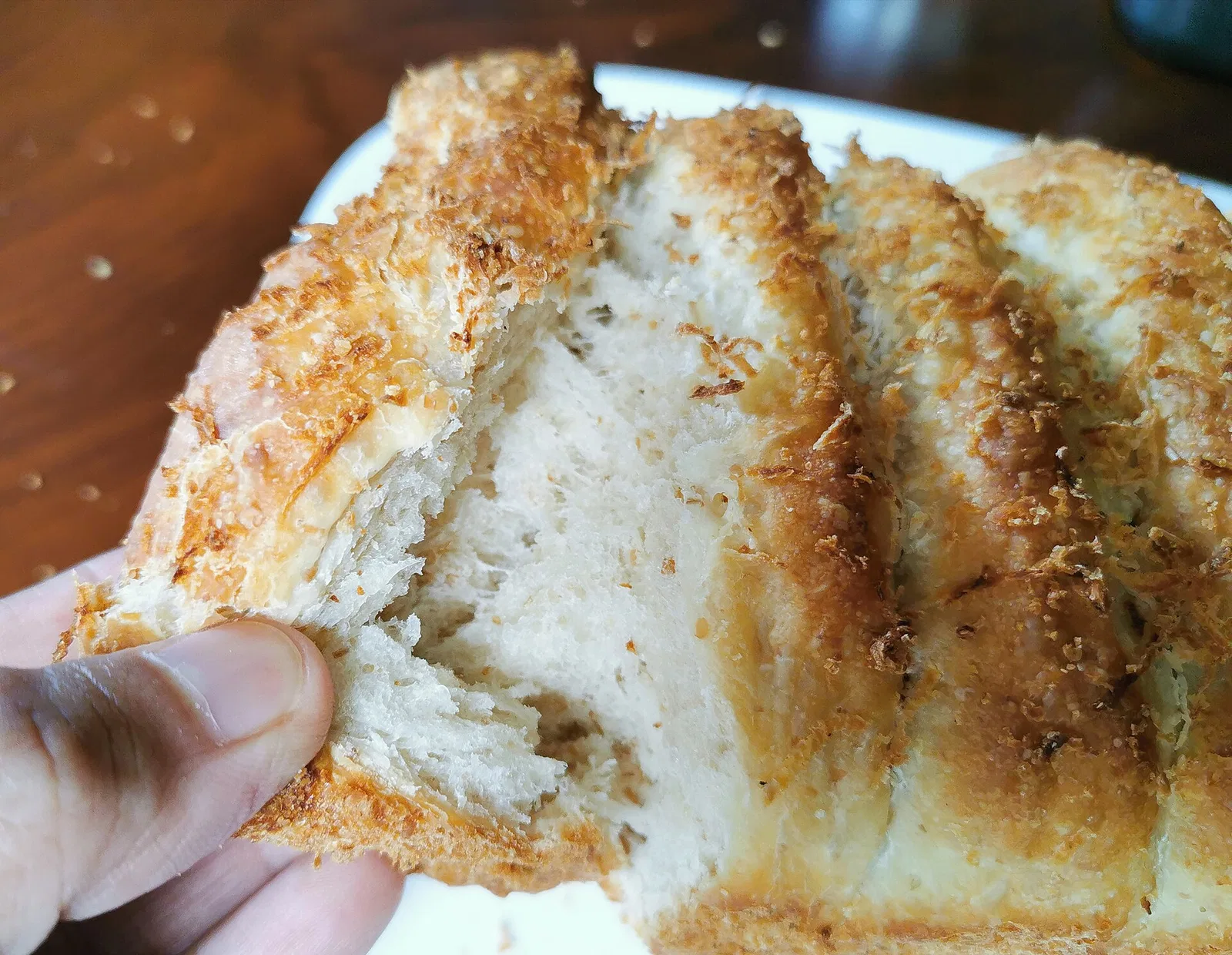
  • Coconut bread — Norfolk Island
    Mdsheth1986 · CC BY-SA 4.0

    Coconut bread

    Bread or buns made with grated coconut, usually served warm or toasted.

    Where: From bakery counters in Burnt Pine and beside fish-fry plates.

Story

The story, in three chapters

At Kingston, surf breaks behind Georgian stone houses and the air smells of salt and pine resin. On the road, almost every driver lifts a finger from the wheel in greeting, and you notice quickly if you forget to answer. Stay at Emily Bay until the light drops on the old pier and the place stops feeling like an Australian footnote and starts feeling like its own world.

  1. Chapter 1

    Before the Pitcairners

    Long before prison walls or church bells, East Polynesian voyagers landed here and left hearths, adzes and rat bones at Emily Bay. By the time James Cook sighted the island in 1774, those settlers were gone. Britain looked at the pines and flax and saw naval promise. In 1788 Lieutenant Philip Gidley King came ashore with convicts and marines and began a settlement at Kingston.

  2. Chapter 2

    The day everything changed

    The convict years were hard, and the second penal colony, opened in 1825, was harsher still. Then the prison settlement emptied. On 8 June 1856, families from overcrowded Pitcairn came ashore from the Morayshire and walked into the old stone buildings. They brought Bible names, Tahitian cooking, and a way of speaking that became Norfuk.

  3. Chapter 3

    A small place with a long memory

    Today this is an Australian external territory, but it still feels like a community built from family lines and shared rituals. Bounty Day is marked each June with a reenactment landing at Kingston. Norfuk survives on signs and in conversation, even as the island's political structure changed again in 2016. Convict ruins, reef swims and genealogy all sit close together here.

Say hello

Say it like a local

  • Watawieh?

    Hello; how are you?

    Say: wot-uh-WEE-uh

  • Yorlye

    You all; everyone

    Say: YOR-lee

  • Aawe

    Yes; okay

    Say: AH-wee

  • Naa

    No

    Say: nah

  • Si yorlye morla

    See you tomorrow

    Say: see YOR-lee MOR-lah

Surprises

Things you did not know

  1. Norfolk Island has no natural harbour. For most of its history, landing people and cargo meant threading surf at Kingston or Cascade.

  2. The first British settlement here followed the founding of Sydney by only weeks. The Crown wanted the island's flax and pines secured early in case a rival power moved first.

  3. Nearby Phillip Island was once stripped almost bare by introduced rabbits, goats and pigs. Its red gullies are part damage record, part recovery story after those animals were removed.

Quiz

One question

Norfolk Island was named for which title?

3 days

3 days in Norfolk Island

  1. Day 1

    Stone rows and lagoon

    Morning at Kingston and Arthurs Vale Historic Area for the museum houses, gaol and cemetery; afternoon swim at Emily Bay; evening back along the shore as the light goes soft on Kingston.

  2. Day 2

    Pines and ridges

    Morning in Norfolk Island National Park for Mount Pitt and the ridge lookouts; lunch in Burnt Pine; late afternoon at St Barnabas Chapel.

  3. Day 3

    North coast air

    Morning at Anson Bay lookout and, if you have the legs, the beach steps; afternoon back through Burnt Pine for food and shops; evening with one last swim or walk at Emily Bay.

At a glance

Norfolk Island: know before you go

Best time to go
October to April for warmer water and longer days; the cooler months are good for walking if you do not mind windier coasts.
Budget
HighFlights, car hire and many groceries cost more than on the mainland, though walks and beaches are largely low-cost.
Etiquette
Wave back when drivers greet you on quieter roads, and say hello in shops. Do not clamber over convict ruins or treat the cemetery as a photo set.
Safety
Roads are narrow, dark after sunset and shared with cattle, so drive slowly. Outside Emily Bay the sea can be rough; ask locally before swimming off open beaches.

At a glance

Capital
Kingston
Population
2,188
Area
35 km² · 13 sq mi
Languages
English, Norfuk
Currency
Australian Dollar (AUD)
Time zone
UTC+11:30, Pacific/Norfolk
Calling code
+6723
Drives on the
Left
Internet domain
.nf
Landlocked
No, it has a coastline
More facts
Continent
Oceania

Neighbouring countries

It has no land borders.

Listen

Listen & watch

Before you go, watch or read

The Bounty

Film

It makes sense of Bounty Day, the repeated surnames in the cemetery, and the Pitcairn inheritance that still shapes the island.

From the community

Trip stories from Norfolk Island

Countries

🇳🇫 Today's country is Norfolk Island. Descendants of the Bounty mutineers resettled this island in 1856. At Kingston, surf breaks behind Georgian stone houses and the air smells of salt and pine resin. On the road, almost every driver lifts a finger from the wheel in greeting, and you notice quickly if you forget to answer. Stay at Emily Bay until the light drops on the old pier and the place stops feeling like an Australian footnote and starts feeling like its own world. 📍 Places to…

Questions

Norfolk Island: frequently asked questions

Norfolk Island: when is the best time to visit?
October to April for warmer water and longer days; the cooler months are good for walking if you do not mind windier coasts.
Norfolk Island: what currency is used?
Currency in Norfolk Island: Australian Dollar (AUD).
Norfolk Island: what language do people speak?
Languages of Norfolk Island: English, Norfuk.
Norfolk Island: what is the capital?
The capital of Norfolk Island is Kingston.

Travel guide

In the community

See who has been there and what you need to travel.

Join the community

Track the countries you have visited and meet travelers who have been there.