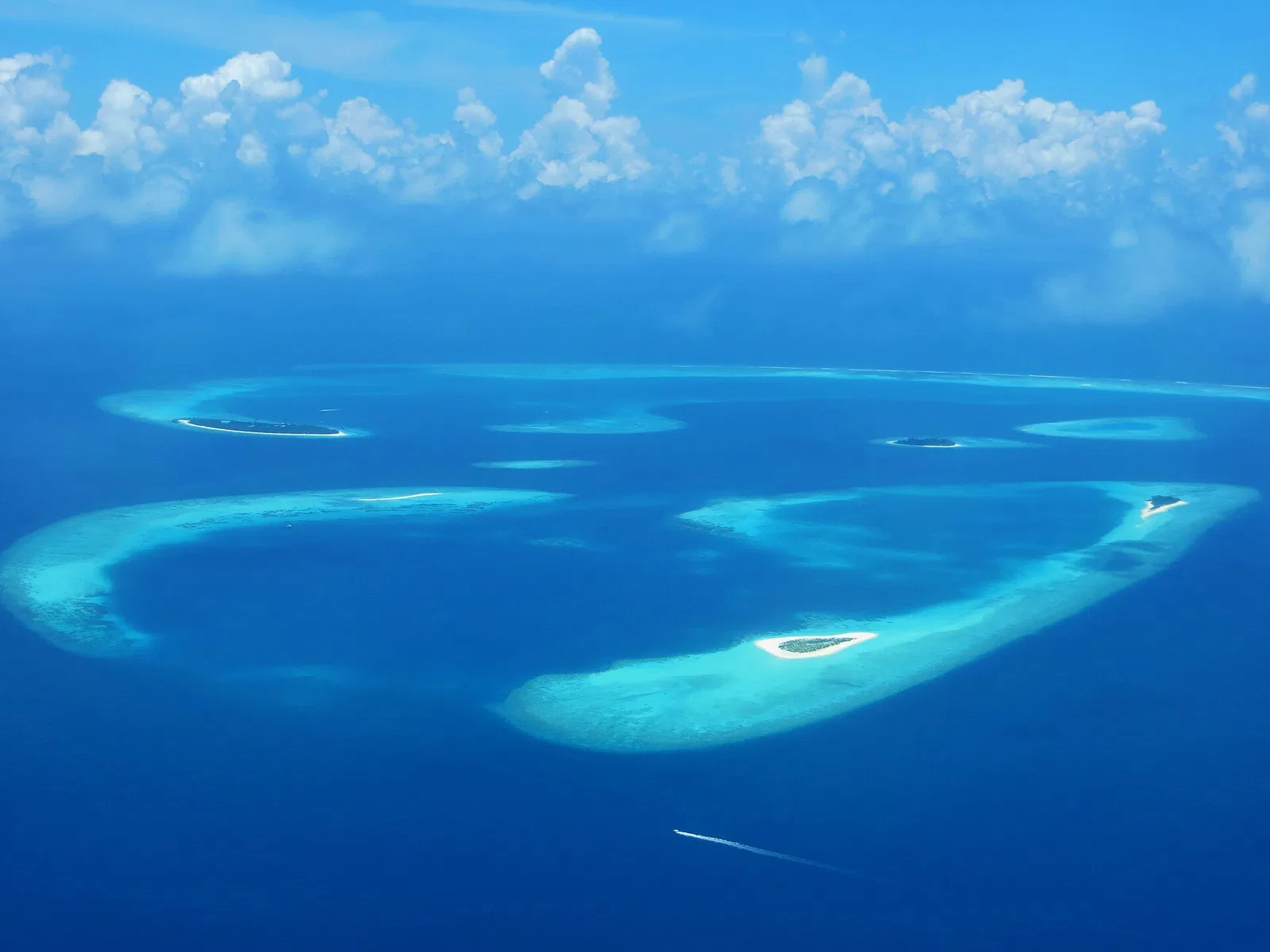
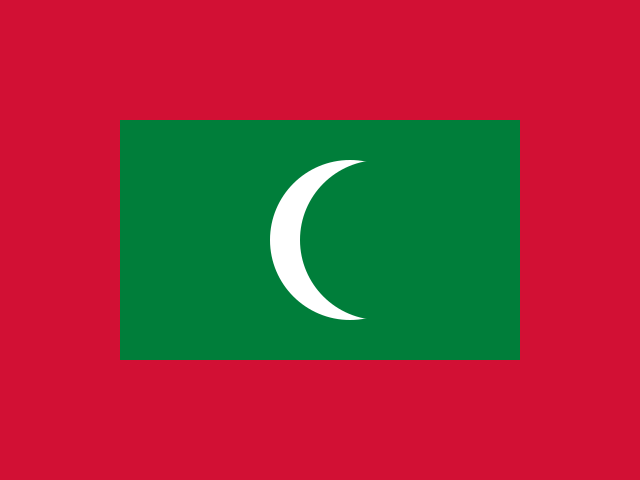
Maldives: The highest natural point is less than six metres above sea level.

Travel guide

Featured on September 27, 2026

Maldives

The highest natural point is less than six metres above sea level.

  • Malé
  • Asia
  • Divehi

Places

Places to visit in Maldives

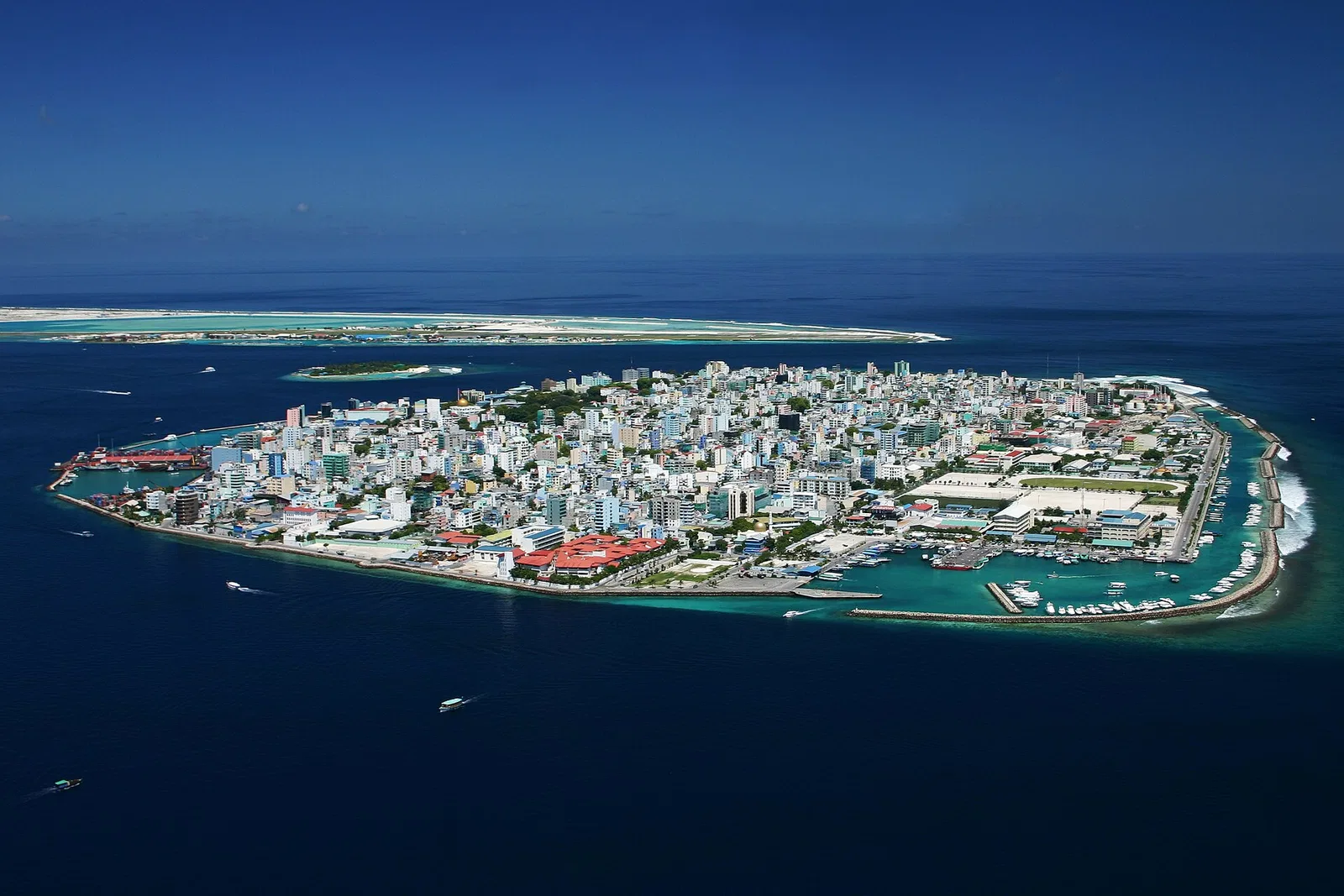
Malé, Maldives
City

Malé

Shahee Ilyas · CC BY-SA 3.0

Go to understand the country beyond the villa deck: the fish market at dusk, the old Friday Mosque, tight lanes full of scooters, and the seawall where the city comes out in the evening. It is compact, noisy and full of daily life.

Tip: Best late afternoon into evening; give it half a day, and dress modestly if you plan to enter mosque grounds.
  • Baa Atoll, Maldives
    Frédéric Ducarme · CC BY-SA 4.0
    Nature

    Baa Atoll

    This is the atoll for reef life, especially Hanifaru Bay when manta rays gather to feed in dense plankton. Even outside the bay, the snorkelling and diving show why the reef is not scenery here but infrastructure.

    Tip: Best from May to November for manta activity; Hanifaru Bay visits are controlled, so book a licensed operator.

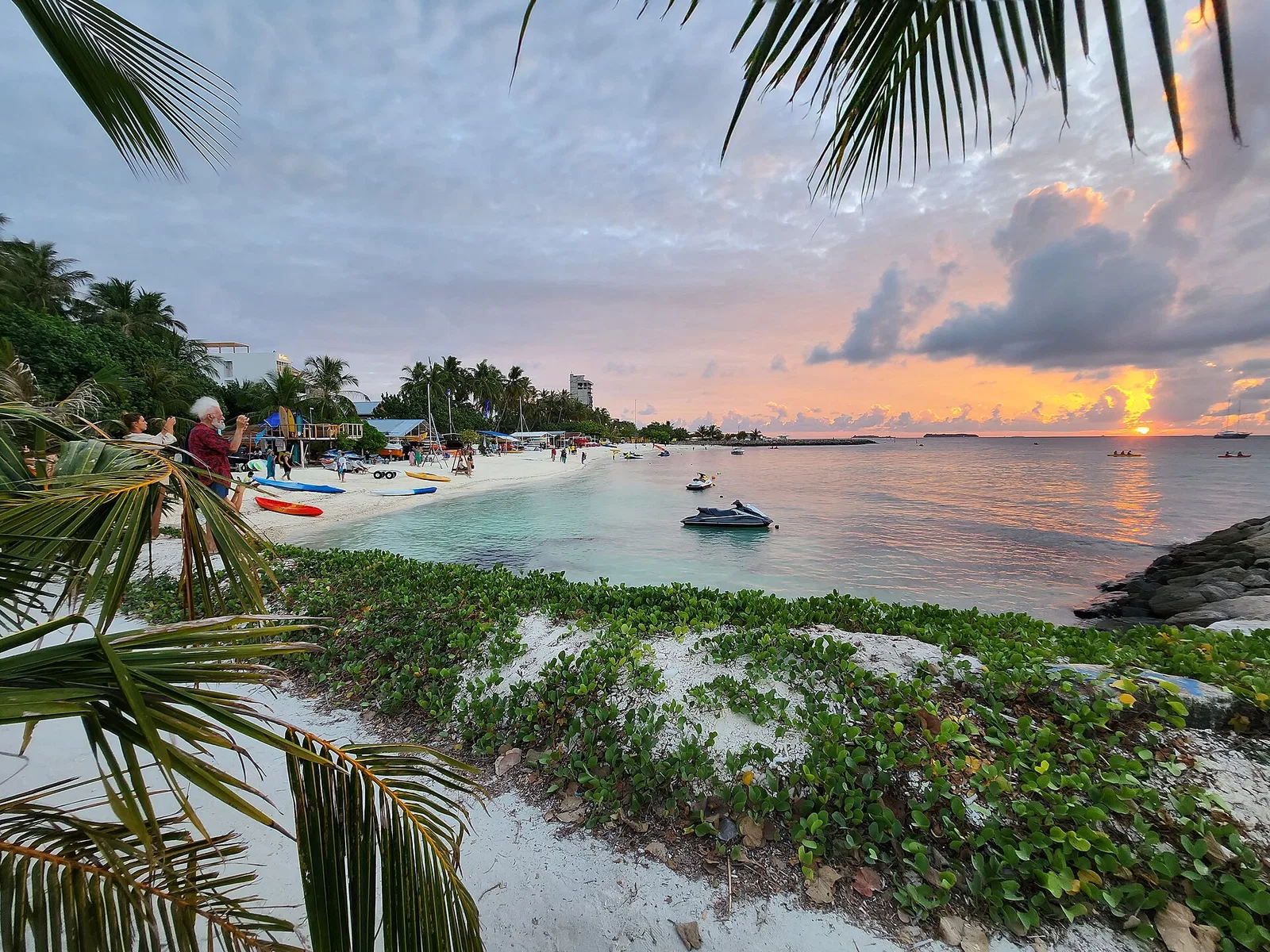
  • Maafushi, Maldives
    Saaremees · CC BY-SA 4.0
    Beach

    Maafushi

    For a local-island stay with dive shops, guesthouses and a designated public beach, where you can see how budget tourism fits into a real community. It is useful precisely because it is not sealed off from ordinary life.

    Tip: Stay overnight rather than day-trip; swimsuits are for the designated beach, not village streets.

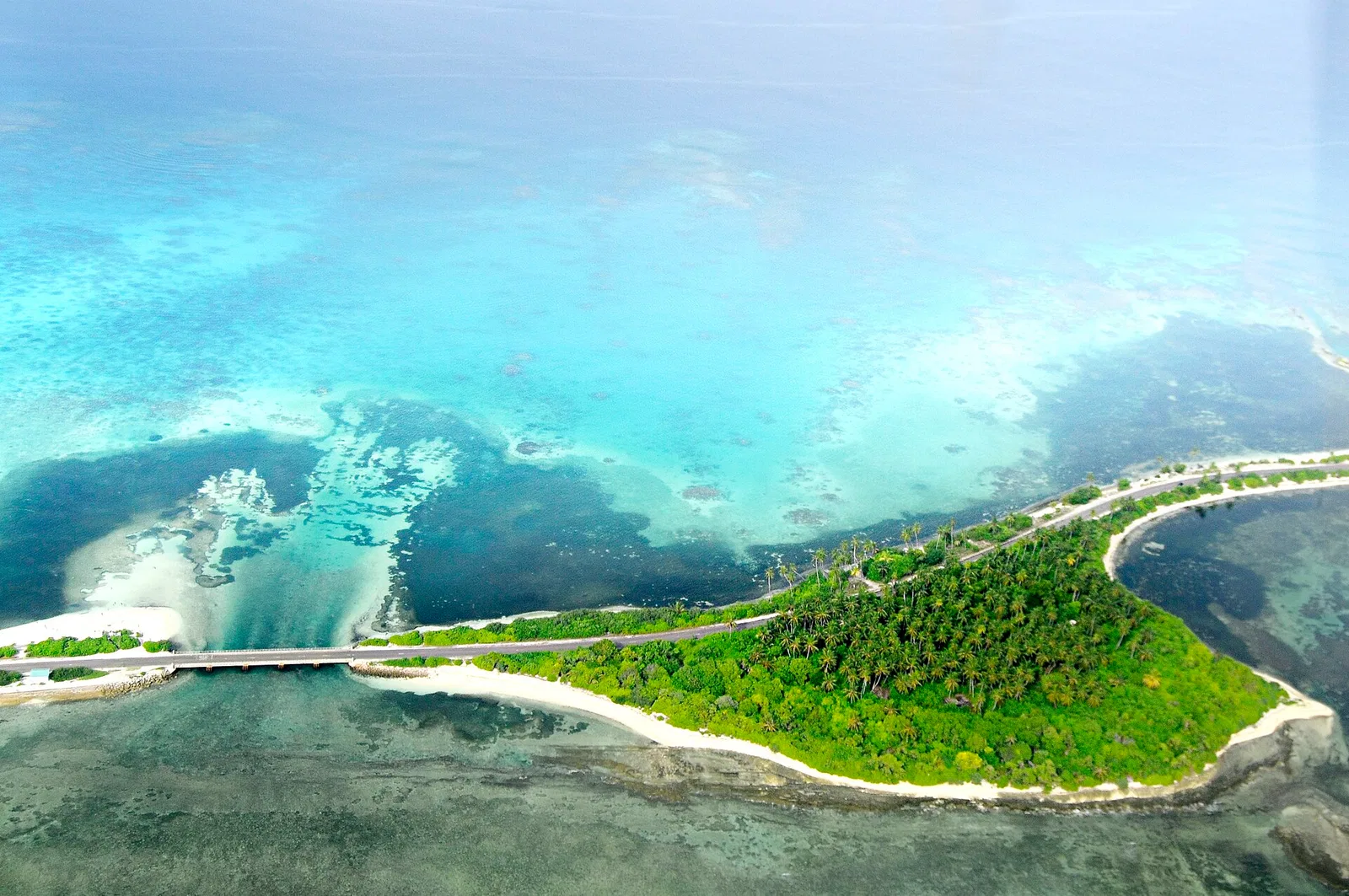
  • Addu City, Maldives
    Ibrahim Asad · CC BY 3.0
    History

    Addu City

    In the far south, linked islands and long causeways give you a sense of scale the resort model hides. Come for cycling, quiet neighbourhoods, and the traces of the old British base at Gan.

    Tip: Give it two days if you can, and rent a bicycle or scooter to cross the connected islands.

  • History

    Utheemu

    Travellers come for Utheemu Ganduvaru, the wooden palace associated with Mohamed Thakurufaanu, and for a look at the northern islands far from the airport belt. It brings the national story down to rooms, beams and doorways.

    Tip: Best combined with wider travel in the north; go with a local guide if you want the history to land.

Eat

What to eat in Maldives

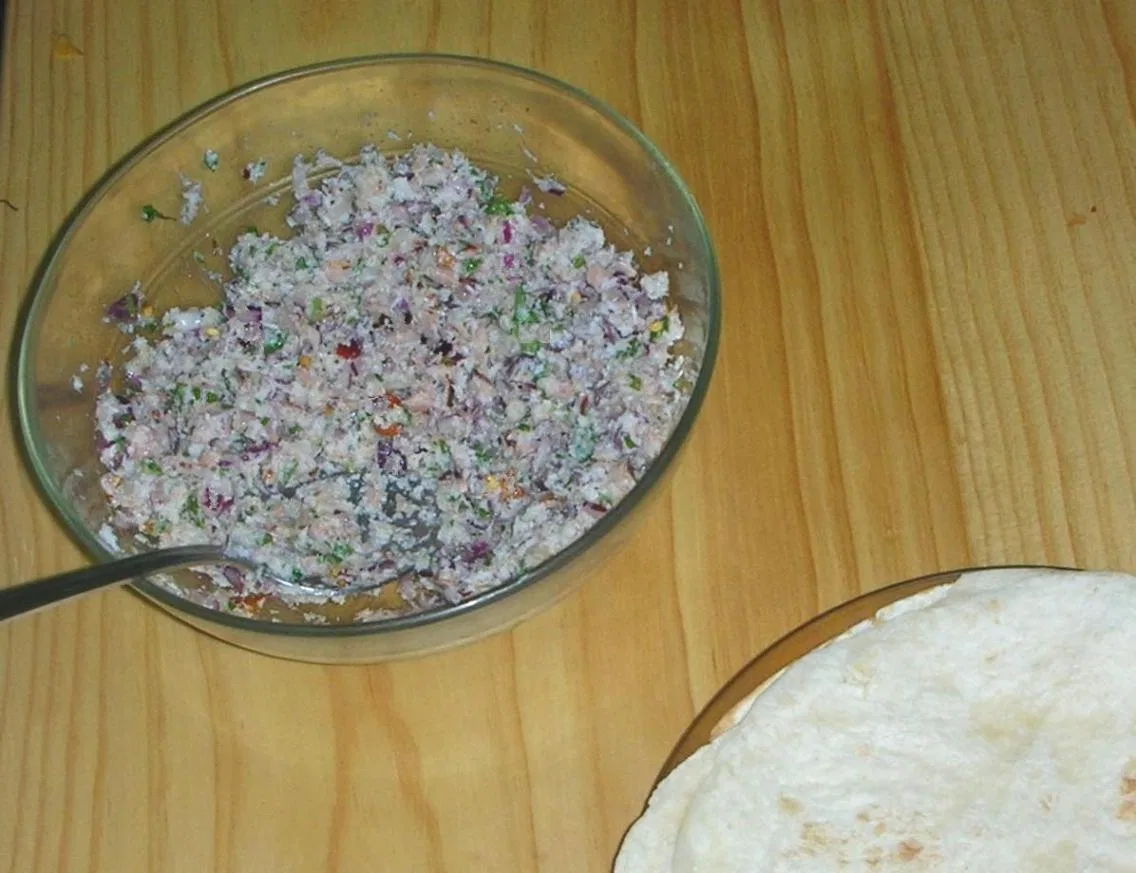
  • Mas huni — Maldives
    Xavier Romero-Frias · CC BY-SA 3.0

    Mas huni

    A breakfast mix of shredded smoked tuna, grated coconut, onion, chili and lime, usually eaten with roshi flatbread.

    Where: At breakfast cafés in Malé and at family tables, with hot tea.

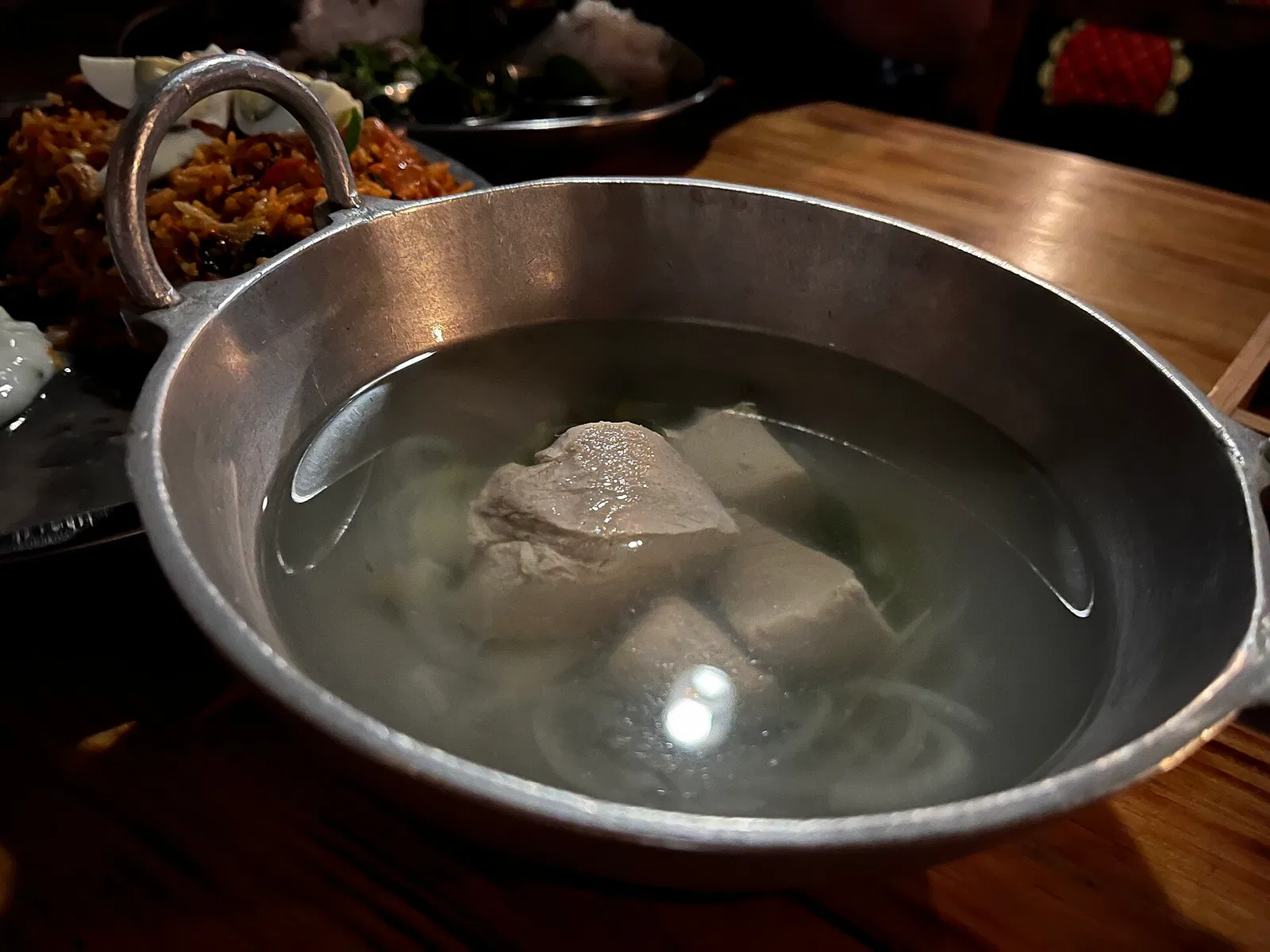
  • Garudhiya — Maldives
    LittleT889 · CC BY 4.0

    Garudhiya

    A clear tuna broth, lightly salted and served with rice, lime, onion and chili.

    Where: At lunch in simple local restaurants and at home.

  • Hedhikaa

    The late-afternoon snack spread: small savouries such as bajiya, gulha and keemiya, usually filled with tuna, coconut, onion and spice.

    Where: At tea shops in Malé in the late afternoon, with black tea.

  • Rihaakuru

    A thick, dark paste made by reducing tuna stock until it turns intensely savoury and concentrated.

    Where: Mostly in home kitchens and on outer islands, eaten with rice, roshi or boiled starches.

Story

The story, in three chapters

In Malé the harbour smells of diesel, brine and tuna blood when the boats come in. Half an hour later on a local island you are barefoot on packed coral sand, watching schoolchildren cycle past guesthouses as the call to prayer carries over the lagoon. Stay for sunset on the Malé seawall, and the place makes sense: a chain of working Muslim islands with resorts threaded through it.

  1. Chapter 1

    Reefs and rulers

    These atolls sat on the sea lanes between Arabia, India and East Africa long before beach brochures existed. Sailors stopped for water, coir rope and dried fish, and island communities learned to live by reef channels and monsoon winds. In 1153, according to Maldivian chronicles, the ruler Dhovemi converted to Islam. A sultanate followed, and Friday mosques in coral stone became the public record of it.

  2. Chapter 2

    Runway and resort

    The British protectorate ended in 1965. In 1968 the monarchy gave way to a republic. Then, in 1972, the first resort islands opened and the economy tilted hard toward the lagoon. Hulhulé's runway, seaplanes and staff boats turned scattered islands into one travel system.

  3. Chapter 3

    Life at the waterline

    The tsunami of 2004 flooded much of the country and made sea level a daily subject, not an abstract one. In 2009 President Mohamed Nasheed held an underwater cabinet meeting in diving gear to make that point to the world. At the same time, guesthouses on local islands opened the country to travellers beyond the resort wall. Today the argument is how to build, dredge and earn a living without losing the reefs that make life here possible.

Say hello

Say it like a local

  • އައްސަލާމު ޢަލައިކުމް

    Hello; peace be upon you

    Say: assalaamu alaikum

  • ޝުކުރިއްޔާ

    Thank you

    Say: shukuriyyaa

  • ވަރަށް ރަނގަޅު

    Very good; I'm fine

    Say: varah rangalhu

  • އާން

    Yes

    Say: aan

  • ނޫން

    No

    Say: noon

Surprises

Things you did not know

  1. The English word atoll comes from Dhivehi. It is borrowed from އަތޮޅު, usually transliterated as atholhu.

  2. Thaana runs right to left, but several of its letter forms began as numerals. It looks older than it is.

  3. Pole-and-line fishing is still central to the tuna trade. Skipjack are commonly caught one fish at a time, with barbless hooks and live bait, not by giant purse-seine nets.

Quiz

One question

Which famous traveller spent time in Malé as a judge?

3 days

3 days in Maldives

  1. Day 1

    Malé at street level

    Morning at Hukuru Miskiy and the surrounding lanes in Malé; afternoon at the local market and fish market; evening on the seawall before sleeping in the capital or near the airport.

  2. Day 2

    Across to Maafushi

    Morning speedboat to Maafushi; afternoon snorkelling or a dive trip from the island; evening tea shop snacks and a walk through the village.

  3. Day 3

    Reef, sand and return

    Morning boat trip from Maafushi to a nearby reef or sandbank; afternoon back to Malé; evening final harbour walk and dinner in the city.

At a glance

Maldives: know before you go

Best time to go
January to April for the driest weather and clearest skies; May to November if you are going specifically for manta activity in places like Baa Atoll.
Budget
HighResort nights and transfers push costs up fast, but local-island guesthouses can cut the bill sharply.
Etiquette
On local islands, dress modestly away from designated bikini beaches, and remember that alcohol is generally confined to resort islands and liveaboards. A bare torso in the village will read as rude, not relaxed.
Safety
The real risks are sun, dehydration and current, especially on independent snorkel trips. Check sea conditions locally, do not swim into channels without advice, and do not stand on coral.

At a glance

Capital
Malé
Population
436,330
Area
298 km² · 115 sq mi
Languages
Divehi
Currency
Maldivian Rufiyaa (MVR)
Time zone
UTC+05:00, Indian/Maldives
Calling code
+960
Drives on the
Left
Internet domain
.mv
Landlocked
No, it has a coastline
More facts
Continent
Asia

Member of

  • United Nations

Neighbouring countries

Listen

Listen & watch

Before you go, watch or read

The Island President

Film

It opens up the politics behind the postcard, especially the way climate and statecraft meet here.

Entry requirements

Maldives visa requirements

Maldives entry requirements by passport: of 197 passports, 8 can enter without a visa, 184 get a visa on arrival, 2 apply online before they travel and 3 need a visa from an embassy or consulate.

Find your passport for the documents, the cost and how long you can stay.

Visa on arrival184 passports

e-Visa2 passports

Visa required3 passports

Safety

Maldives safety: is it safe to visit?

Level 2 of 4Exercise Increased Caution

Due to terrorism

US State Dept, updated July 20, 2025. Advisories change: check your own government's travel advice before you go.

From the community

Trip stories from Maldives

Countries

🇲🇻 Today's country is Maldives. The highest natural point is less than six metres above sea level. In Malé the harbour smells of diesel, brine and tuna blood when the boats come in. Half an hour later on a local island you are barefoot on packed coral sand, watching schoolchildren cycle past guesthouses as the call to prayer carries over the lagoon. Stay for sunset on the Malé seawall, and the place makes sense: a chain of working Muslim islands with resorts threaded through it. 📍 Places…

Questions

Maldives: frequently asked questions

Maldives visa: do I need one?
Maldives entry requirements by passport: of 197 passports, 8 can enter without a visa, 184 get a visa on arrival, 2 apply online before they travel and 3 need a visa from an embassy or consulate.
Maldives: is it safe to visit?
US State Dept rates Maldives at level 2 of 4. Exercise Increased Caution: Due to terrorism.
Maldives: when is the best time to visit?
January to April for the driest weather and clearest skies; May to November if you are going specifically for manta activity in places like Baa Atoll.
Maldives: what currency is used?
Currency in Maldives: Maldivian Rufiyaa (MVR).
Maldives: what language do people speak?
Languages of Maldives: Divehi.
Maldives: what is the capital?
The capital of Maldives is Malé.

Travel guide

In the community

0 travelers0 trips1 wishlisted

See who has been there and what you need to travel.

Join the community

Track the countries you have visited and meet travelers who have been there.