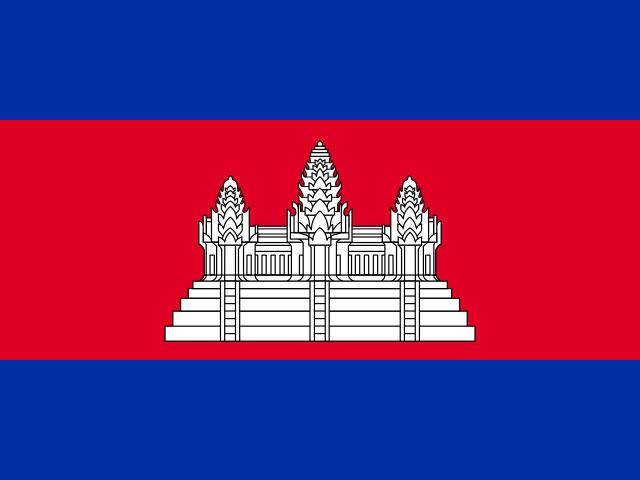
Cambodia: Every monsoon, the Tonlé Sap River runs backward.

Travel guide

Featured on October 7, 2026

Cambodia

Every monsoon, the Tonlé Sap River runs backward.

  • Phnom Penh
  • Asia
  • Khmer

Places

Places to visit in Cambodia

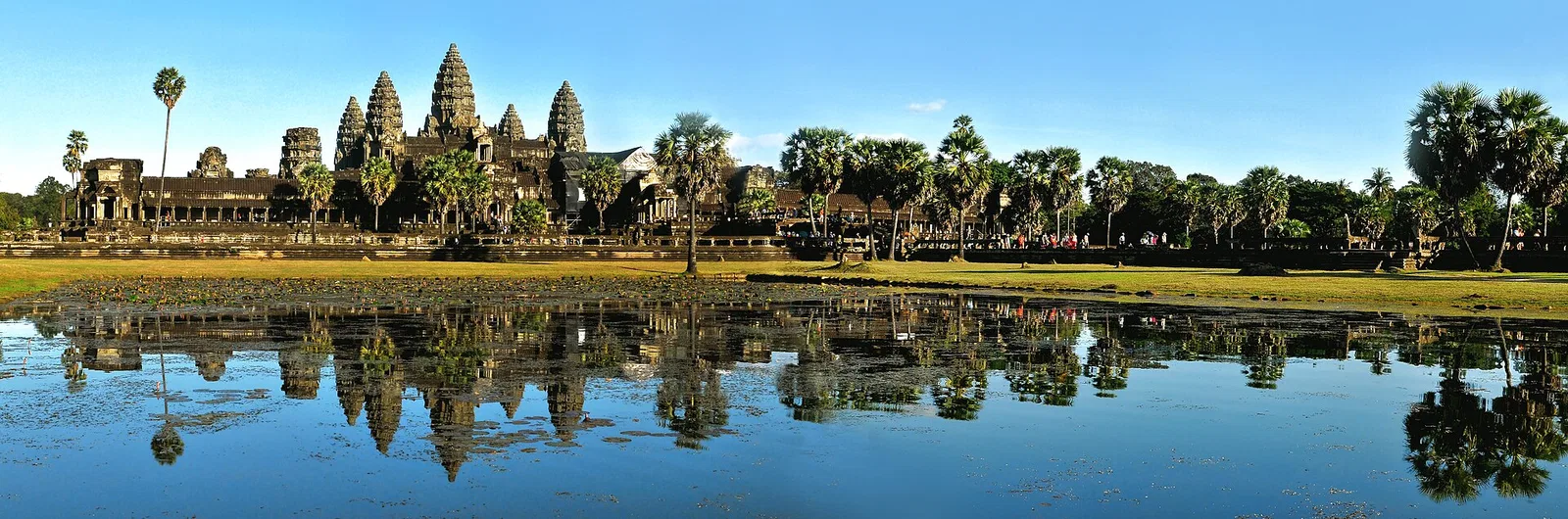
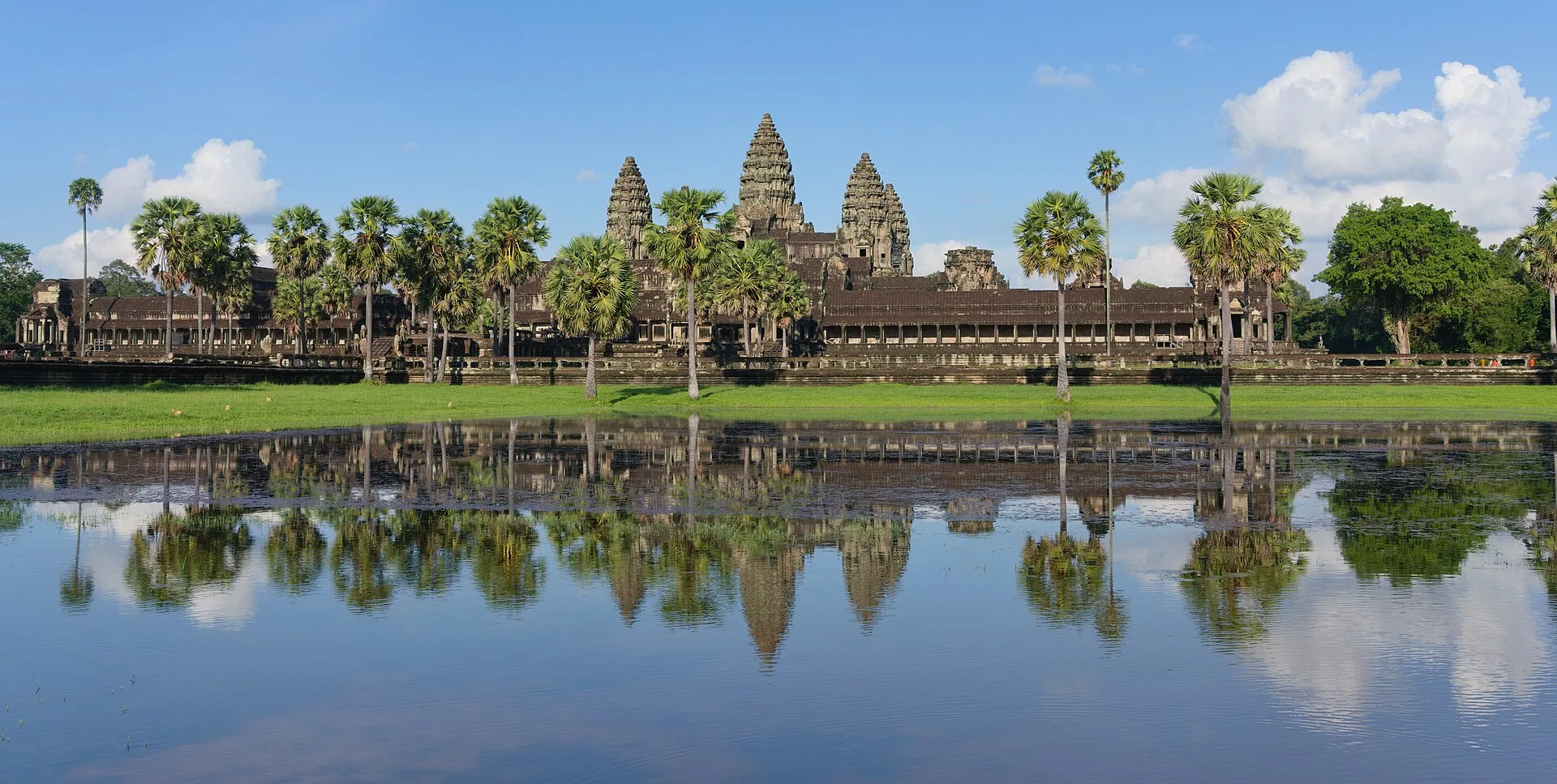
Angkor, Cambodia
History

Angkor

LBM1948 · CC BY-SA 4.0

Go for the bas-reliefs at Angkor Wat, the face towers of Bayon and Ta Prohm's masonry gripped by roots. More than a single monument, it lets you walk through the remains of a whole medieval capital.

Tip: Start before sunrise and give it two mornings if you can; the main temples are better spread out than rushed.
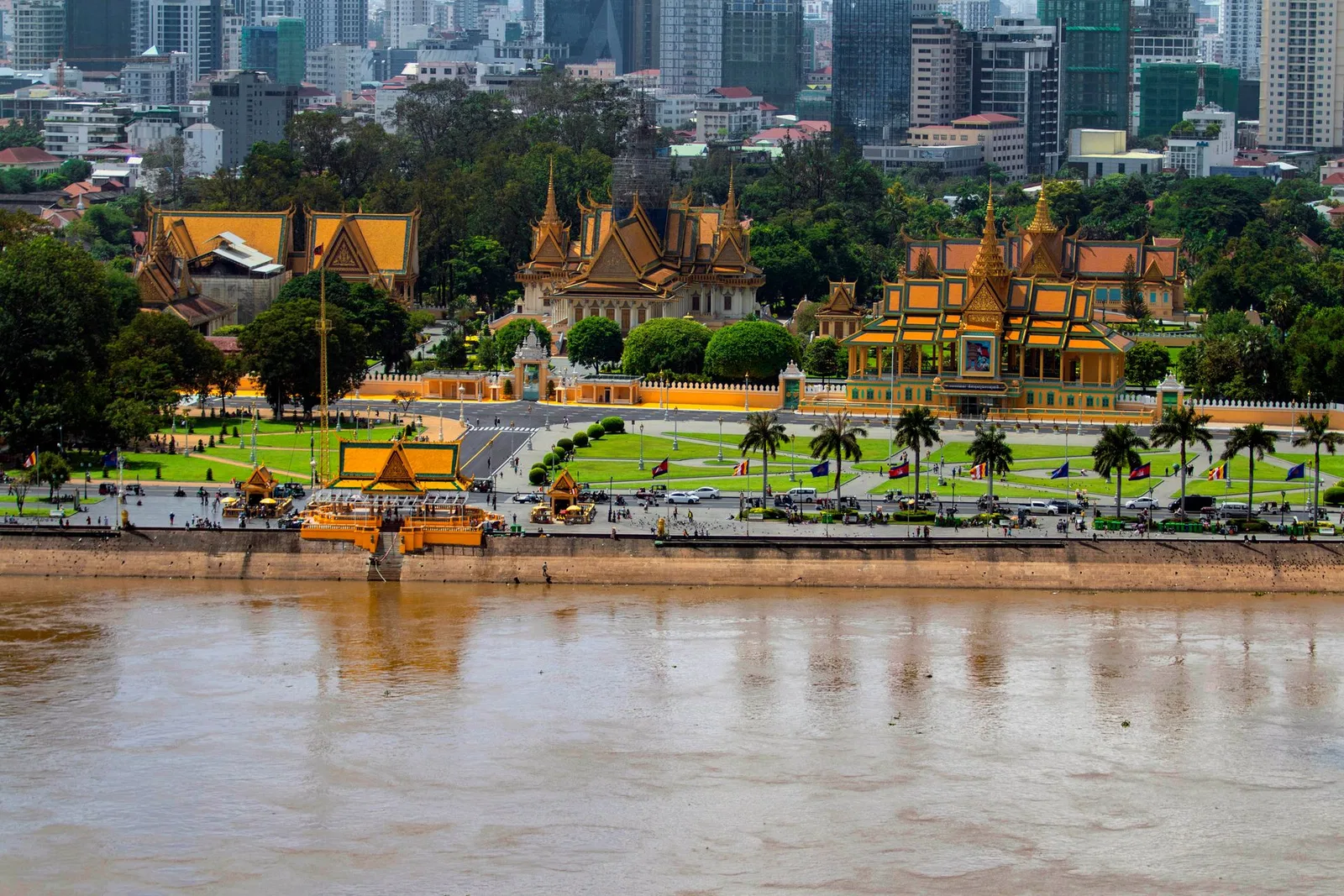
  • Phnom Penh, Cambodia
    Piseth Mao · Pexels License
    City

    Phnom Penh

    The capital puts the Royal Palace, the National Museum and Tuol Sleng in one compact day, then sends you to the riverfront for dusk. It is where court ritual, French-era streets and the violence of the 1970s sit uncomfortably close.

    Tip: Stay at least two nights; do Tuol Sleng early, then keep the Mekong and Tonlé Sap waterfront for evening.

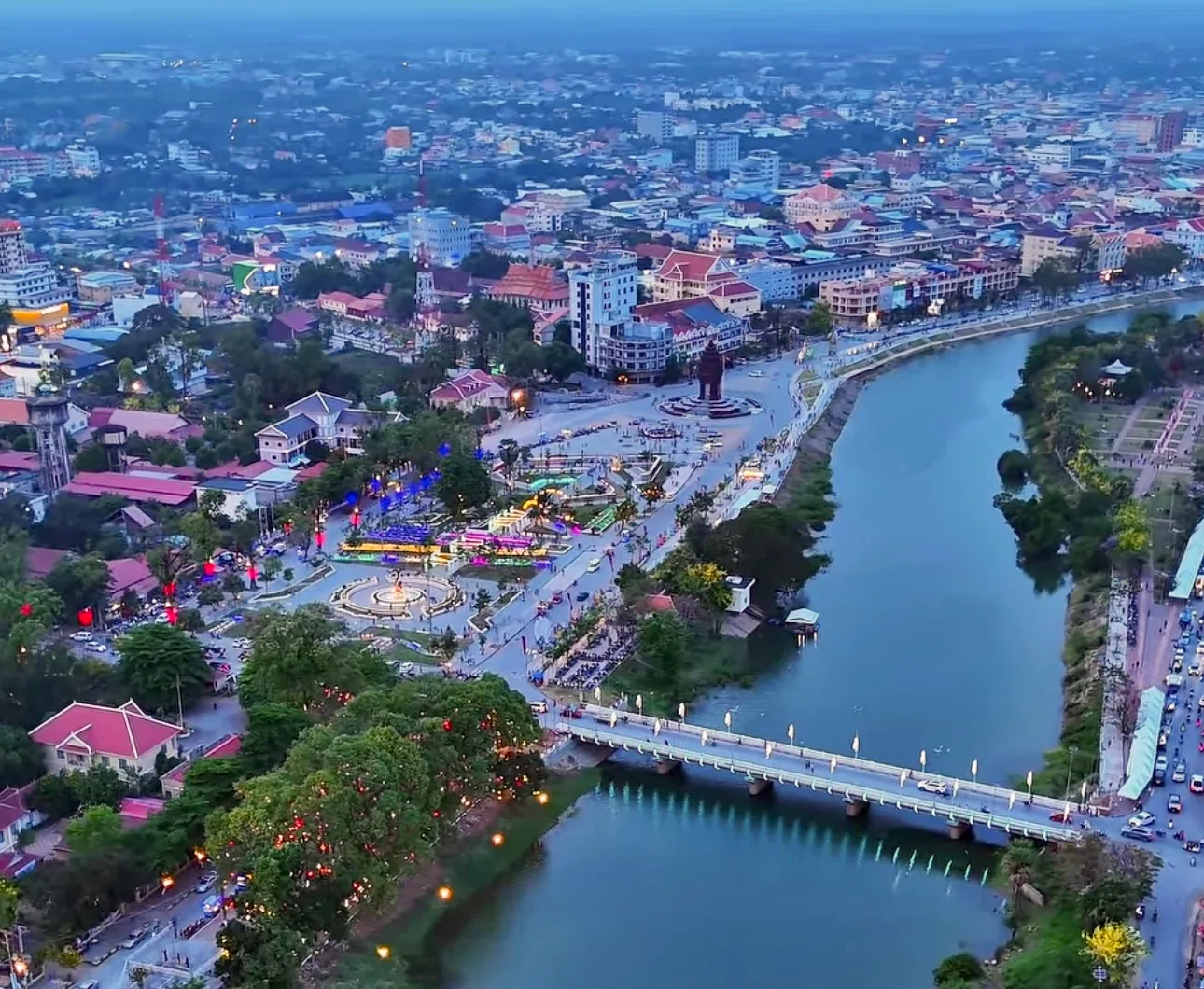
  • Battambang, Cambodia
    Maharaja1994 · CC BY 4.0
    Culture

    Battambang

    Come for market breakfasts, low-rise streets that still move at bicycle pace and the bat exodus from nearby Phnom Sampov at dusk. It gives you western Cambodia without the temple crowds.

    Tip: Stay the night; head to Phnom Sampov before dusk and wait for the bats rather than turning up at dark.

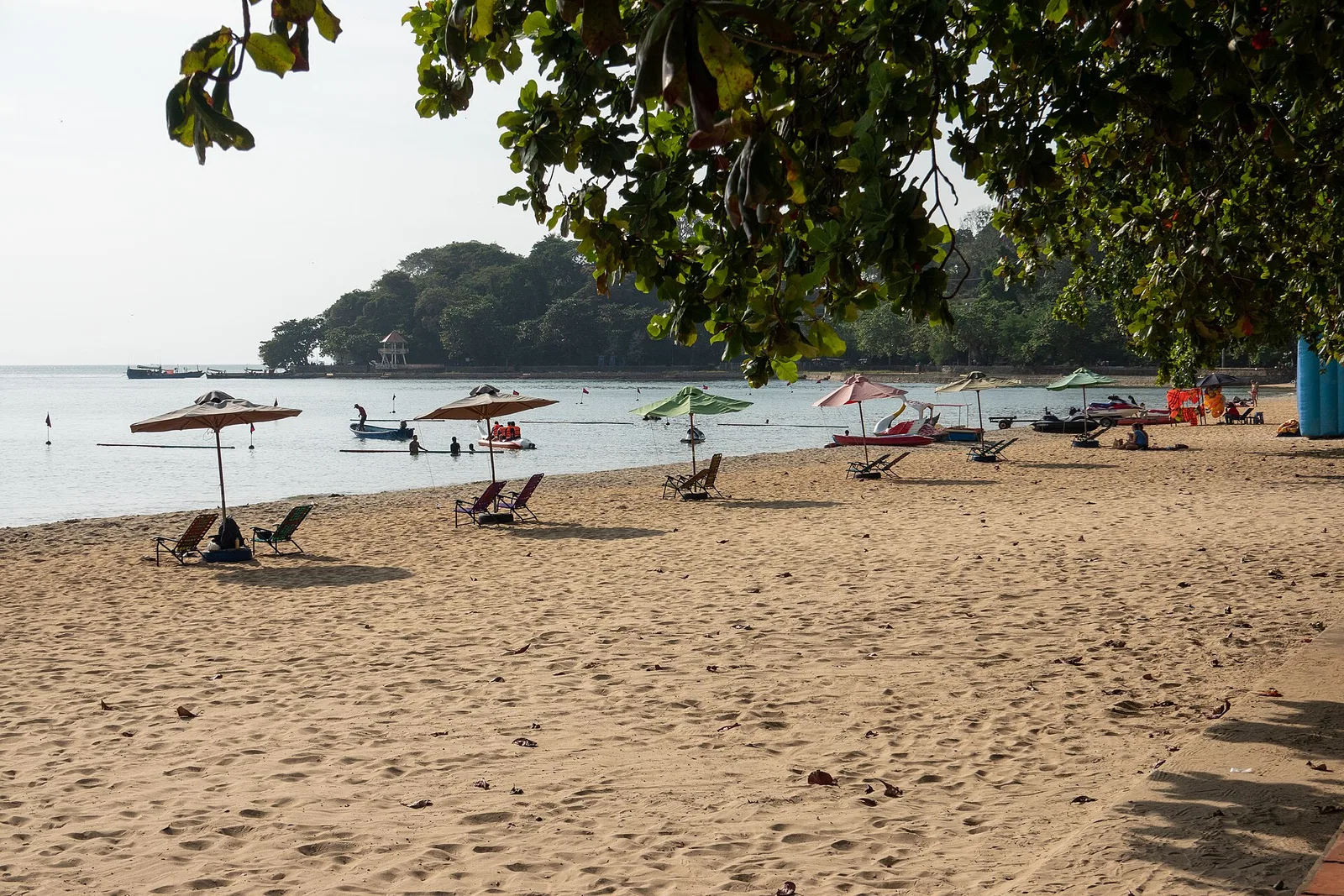
  • Kep, Cambodia, Cambodia
    PsamatheM · CC BY-SA 4.0
    Beach

    Kep, Cambodia

    Lunch is the point: crab cooked with green Kampot pepper, eaten within sight of the boats that landed it. Between meals you can walk past decaying villas and up into Kep National Park.

    Tip: Come for lunch rather than a resort stay; the Crab Market is busiest late morning.

  • Adventure

    Cardamom Mountains

    This is the other Cambodia: rainforest, river crossings, leeches, hornbills and community-run camps deep in the southwest. After stone and cities, it puts the country back in the scale of forest.

    Tip: Go with a lodge or licensed guide, especially in the rains, and pack a dry bag.

Eat

What to eat in Cambodia

  • Bai sach chrouk

    Thin slices of pork marinated with garlic and coconut milk are grilled over charcoal and served over rice with pickles and a light broth.

    Where: At dawn street stalls and corner breakfast shops; this is a morning meal.

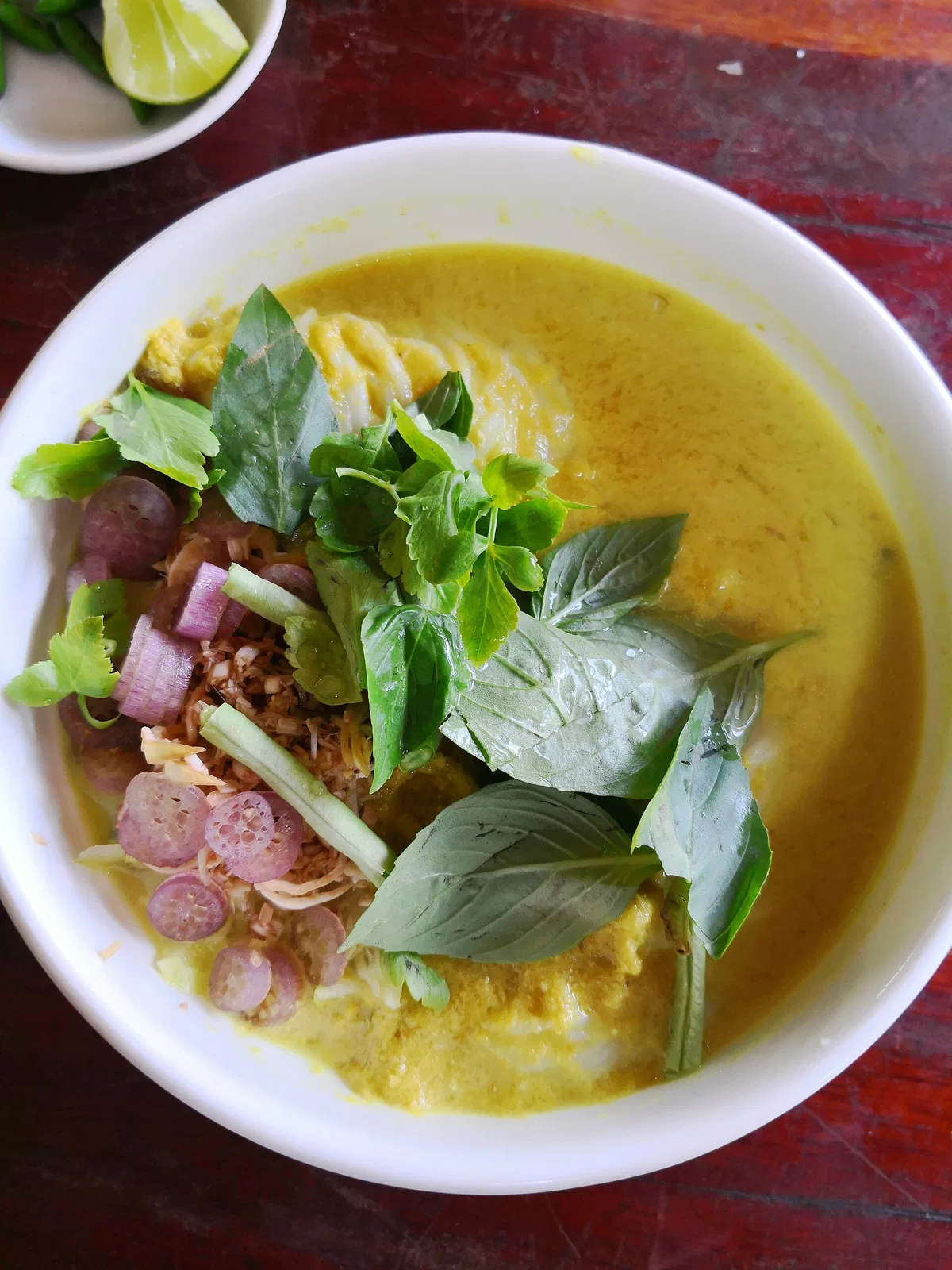
  • Num banhchok — Cambodia
    Thomas Wanhoff from Siem Reap, Cambodia · CC BY-SA 2.0

    Num banhchok

    Fresh rice noodles are topped with a light fish gravy scented with lemongrass, turmeric and kaffir lime, then covered with raw leaves and vegetables.

    Where: From morning market sellers and women carrying baskets through neighbourhoods.

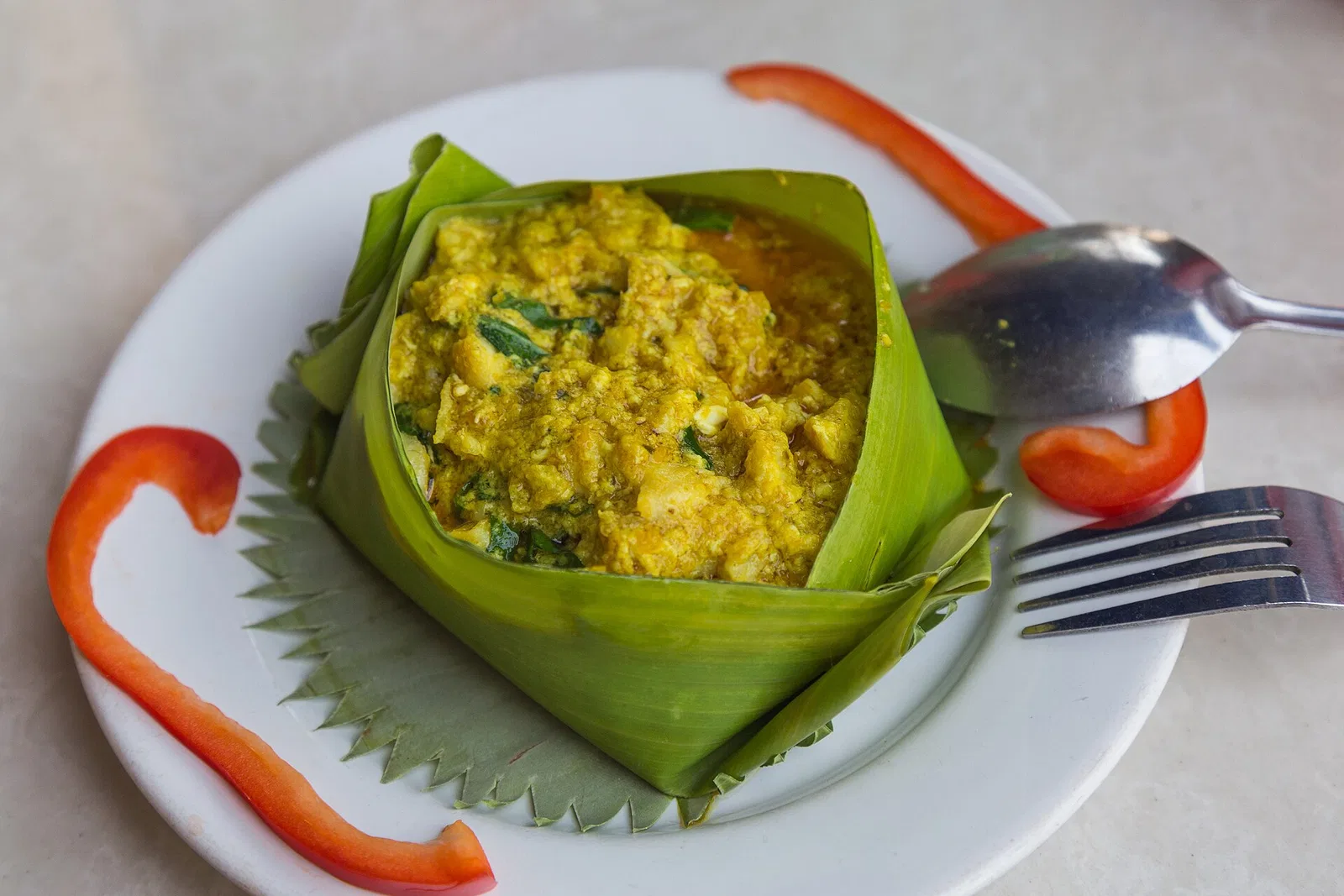
  • Fish amok — Cambodia
    Marcin Konsek · CC BY-SA 4.0

    Fish amok

    Fish is mixed with kroeung curry paste, coconut milk and egg, then steamed, often in a banana-leaf cup.

    Where: At neighbourhood rice restaurants and on family celebration tables; it is better there than on buffet lines.

  • Kdam chaa

    Crab is stir-fried with fresh green peppercorns, garlic and sauce, then cracked open at the table.

    Where: At the Crab Market in Kep, with the sea a few steps away.

Story

The story, in three chapters

Before sunrise in Siem Reap, the air smells of incense, damp stone and grilled pork, and the road to Angkor is already full of scooters. Later, in Phnom Penh, you can walk from the Royal Palace to Tuol Sleng and feel the century tilt under your feet. What stays with people is the rhythm: shoes off at the doorway, iced coffee before the heat, and wedding music drifting out of a tented side street after dark.

  1. Chapter 1

    Stone and water

    In 802, a court ritual on Phnom Kulen marked Jayavarman II as a king apart. Engineers then cut canals and reservoirs into the plain and turned monsoon water into rice. In the early twelfth century, Suryavarman II ordered Angkor Wat, its galleries filling with battles, gods and the churning sea of Hindu myth. When Cham forces reached Angkor in 1177 by water, Jayavarman VII answered with a new capital and the stone faces of Bayon.

  2. Chapter 2

    The city emptied

    On 17 April 1975, Khmer Rouge troops entered Phnom Penh to cheers, dust and black smoke. Within hours they were pushing patients out of hospitals, families out of shopfronts and whole streets onto the roads. At Tuol Sleng, schoolrooms became cells and mug-shot rooms. Vietnamese forces took the capital in January 1979, but the country that reopened after that was not the one that had been emptied.

  3. Chapter 3

    After the blue helmets

    In 1993, blue-helmeted UN staff and voters lined up at schools and pagodas for a national election. Angkor returned to world itineraries, garment factories pulled young workers into the city and Siem Reap filled with hotels and tuk-tuks. Power stayed tight: Hun Sen ruled for decades before handing the premiership to Hun Manet in 2023. At dawn now, monks still collect alms beside iced-coffee carts and delivery bikes.

Say hello

Say it like a local

  • ជំរាបសួរ

    A polite hello

    Say: joom reap suor

  • អរគុណច្រើន

    Thanks a lot

    Say: aw-kun chrahn

  • អត់អីទេ

    No worries / it's fine

    Say: ot ey tay

  • ញ៉ាំបាយហើយឬនៅ?

    "Eaten yet?" — often just a warm way of asking how you are

    Say: nyam bai hoy rue nov?

  • ថោកបន្តិចបានទេ?

    Can you do a little better on the price?

    Say: thowk bon-tich ban tay?

Surprises

Things you did not know

  1. In 2022, scientists in Stung Treng documented a giant freshwater stingray from the Mekong as the heaviest freshwater fish ever recorded. The river here still produces creatures that sound like travellers' tales.

  2. Cambodia chose one of the world's rarest large birds as its national bird. The giant ibis still survives in the northern dry forests, where conservation work now protects nests and seasonal feeding pools.

  3. Kampot pepper has the same kind of European legal protection as Champagne. The EU granted it protected geographical indication status in 2016, tying the name to pepper grown in a defined area around Kampot and Kep.

Quiz

One question

Which direction does Angkor Wat face?

3 days

3 days in Cambodia

  1. Day 1

    Stone city at dawn

    Morning at Angkor Wat and Bayon, afternoon at Ta Prohm, evening back in Siem Reap for the old market streets and an early night.

  2. Day 2

    Road south through older ruins

    Drive from Siem Reap to Phnom Penh with a long stop at Sambor Prei Kuk, then reach the riverside by evening.

  3. Day 3

    The capital, whole

    Morning at the Royal Palace and National Museum, afternoon at Tuol Sleng, evening by the river or in the lanes around Street 240.

At a glance

Cambodia: know before you go

Best time to go
November to February for drier air and easier road travel; June to August if you want green fields and can live with afternoon rain.
Budget
LowStreet food and simple rooms are cheap by world standards, but temple passes, private cars and lodges in remote areas lift the cost quickly.
Etiquette
Dress modestly for pagodas and active shrines, and take your shoes off when asked. Using both hands to give or receive something from an elder or at a shrine is a small courtesy that reads well.
Safety
The everyday risks are traffic and phone or bag snatches in the cities. Keep your phone away from the street edge, use ride apps or arranged drivers at night, and do not wander off marked paths in remote countryside because unexploded ordnance still exists.

At a glance

Capital
Phnom Penh
Population
17,423,880
Area
181,035 km² · 69,898 sq mi
Languages
Khmer
Currency
Cambodian Riel (KHR)
Time zone
UTC+07:00, Asia/Phnom_Penh
Calling code
+855
Drives on the
Right
Internet domain
.kh
Landlocked
No, it has a coastline
More facts
Continent
Asia

Member of

  • ASEAN
  • United Nations

Neighbouring countries

Listen

Listen & watch

Before you go, watch or read

The Missing Picture

Film

Rithy Panh turns the Khmer Rouge years into something intimate and legible, using clay figures and archive footage instead of spectacle.

Entry requirements

Cambodia visa requirements

Cambodia entry requirements by passport: of 196 passports, 8 can enter without a visa, 175 get a visa on arrival, 13 apply online before they travel and 0 need a visa from an embassy or consulate.

Find your passport for the documents, the cost and how long you can stay.

Visa on arrival175 passports

Safety

Cambodia safety: is it safe to visit?

Level 2 of 4Exercise Increased Caution

Due to crime

US State Dept, updated September 1, 2025. Advisories change: check your own government's travel advice before you go.

From the community

Trip stories from Cambodia

Countries

🇰🇭 Today's country is Cambodia. Every monsoon, the Tonlé Sap River runs backward. Before sunrise in Siem Reap, the air smells of incense, damp stone and grilled pork, and the road to Angkor is already full of scooters. Later, in Phnom Penh, you can walk from the Royal Palace to Tuol Sleng and feel the century tilt under your feet. What stays with people is the rhythm: shoes off at the doorway, iced coffee before the heat, and wedding music drifting out of a tented side street after…

❤️1

Questions

Cambodia: frequently asked questions

Cambodia visa: do I need one?
Cambodia entry requirements by passport: of 196 passports, 8 can enter without a visa, 175 get a visa on arrival, 13 apply online before they travel and 0 need a visa from an embassy or consulate.
Cambodia: is it safe to visit?
US State Dept rates Cambodia at level 2 of 4. Exercise Increased Caution: Due to crime.
Cambodia: when is the best time to visit?
November to February for drier air and easier road travel; June to August if you want green fields and can live with afternoon rain.
Cambodia: what currency is used?
Currency in Cambodia: Cambodian Riel (KHR).
Cambodia: what language do people speak?
Languages of Cambodia: Khmer.
Cambodia: what is the capital?
The capital of Cambodia is Phnom Penh.

Travel guide

In the community

2 travelers2 trips2 wishlisted

3.0(1 rating)

See who has been there and what you need to travel.

Join the community

Track the countries you have visited and meet travelers who have been there.