Bolivia: A navy without a coastline still trains on Lake Titicaca.

Travel guide

Featured on November 21, 2026

Bolivia

A navy without a coastline still trains on Lake Titicaca.

  • Sucre
  • Americas
  • Spanish

Places

Places to visit in Bolivia

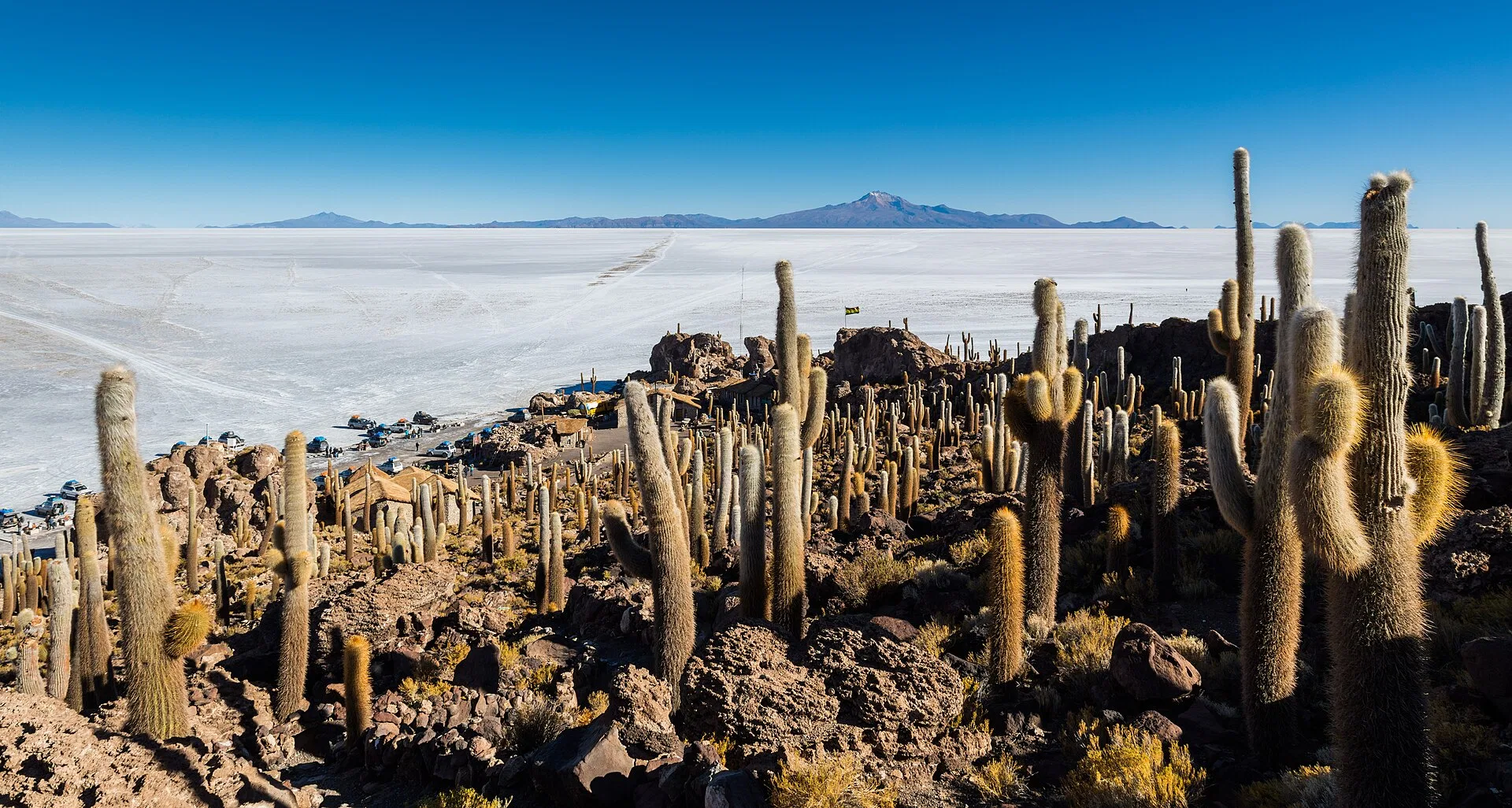
Salar de Uyuni, Bolivia
Nature

Salar de Uyuni

Christopher Crouzet · CC BY-SA 4.0

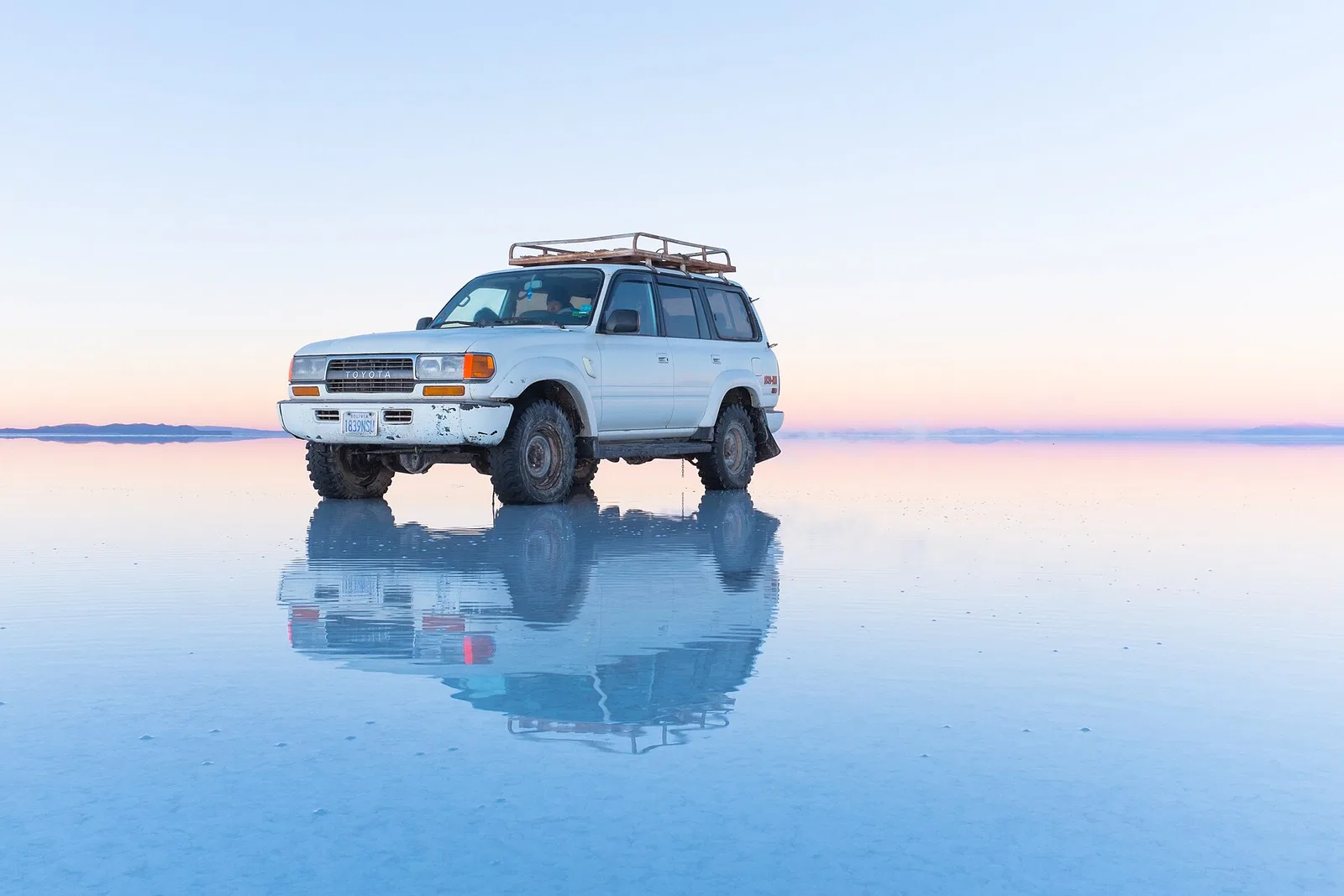
People come for scale and for the trick it plays on the eye. In the dry season the salt crust breaks into hard white polygons; after rain, the flooded surface turns the horizon into a mirror and the jeeps seem to float.

Tip: A one-day trip only skims the edge; the multi-day jeep route is worth paying for, and January to March gives you the mirror effect.
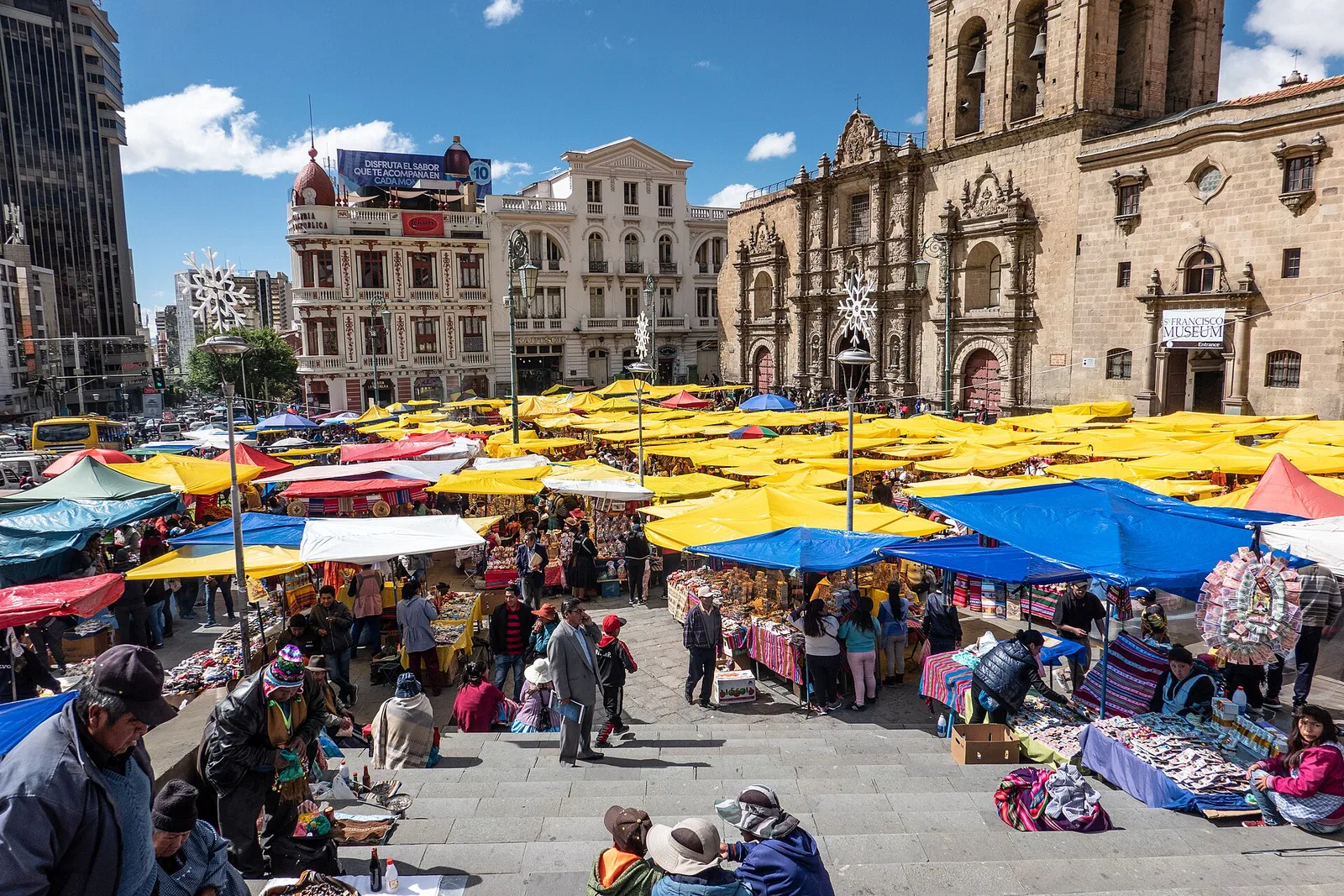
  • La Paz, Bolivia
    PsamatheM · CC BY-SA 4.0
    City

    La Paz

    This is the city that teaches you the country's vertical logic. Ride Mi Teleférico over the valley, walk from Plaza Murillo to the markets around San Francisco, and watch how daily life shifts with altitude, politics and migration.

    Tip: Give it at least two days and take the first afternoon slowly. The altitude is not theoretical.

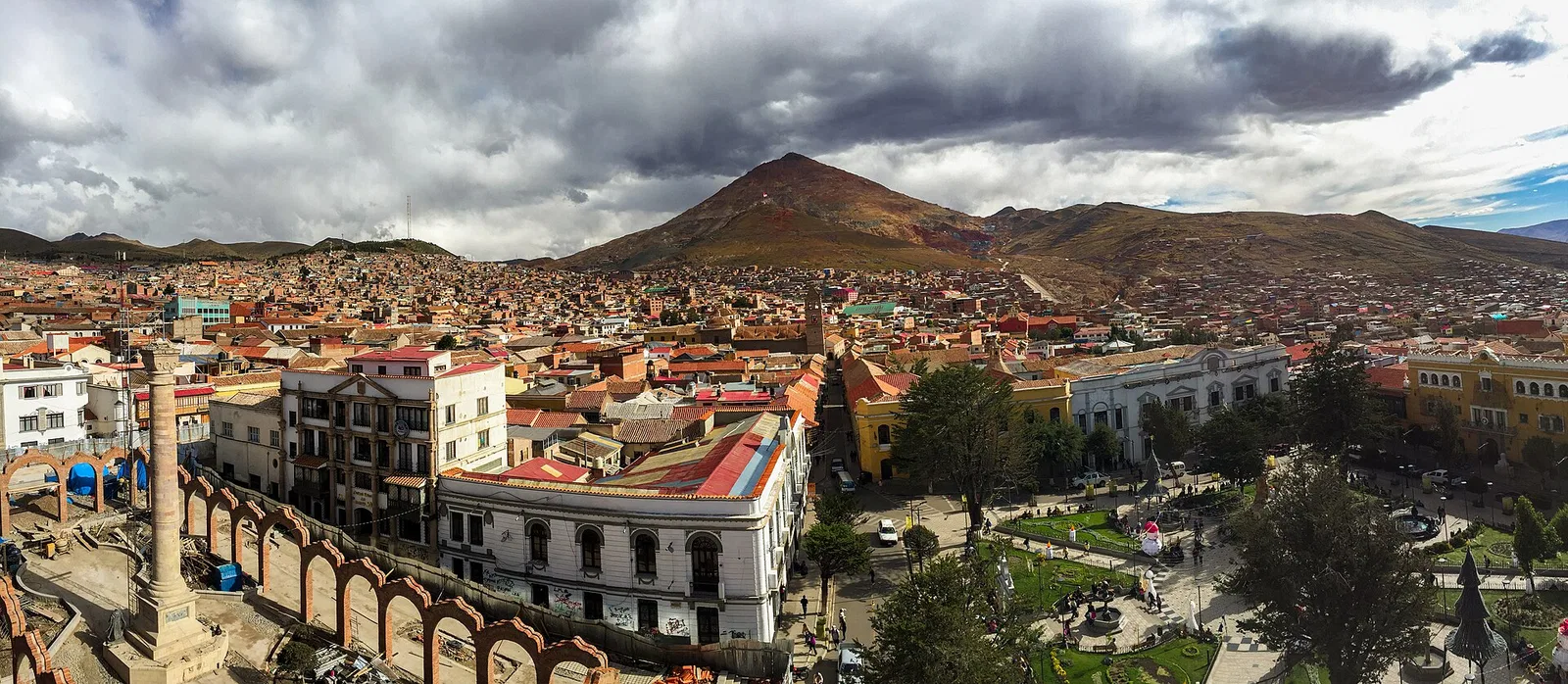
  • Potosí, Bolivia
    EEJCC · CC BY-SA 4.0
    History

    Potosí

    Go to see how silver changed the world, and what it cost. Casa de la Moneda shows the machinery of empire in close detail, while Cerro Rico still looms over the city, scarred and worked.

    Tip: The mint takes half a day; only do a mine tour with a licensed operator, and only if tight, dusty spaces do not bother you.

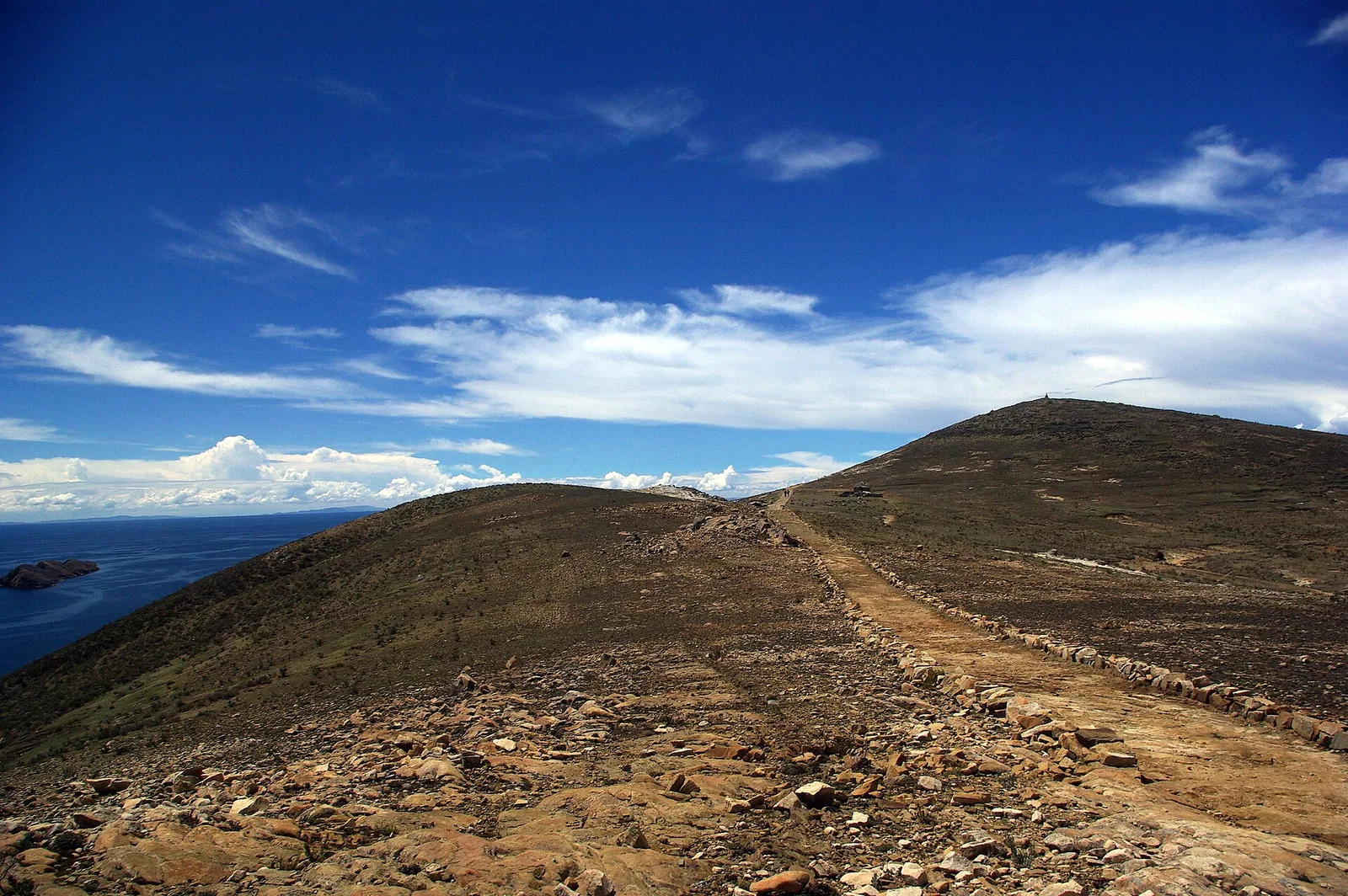
  • Isla del Sol, Bolivia
    Steve Bennett · CC BY-SA 4.0
    Culture

    Isla del Sol

    This is the Lake Titicaca stop that earns the boat ride. You walk old ridge paths between small communities, climb Inca steps, and watch evening light move across one of the landscapes where Andean origin stories begin.

    Tip: Stay one night if you can. The late light and first boats are the point, and rushed day trips miss them.

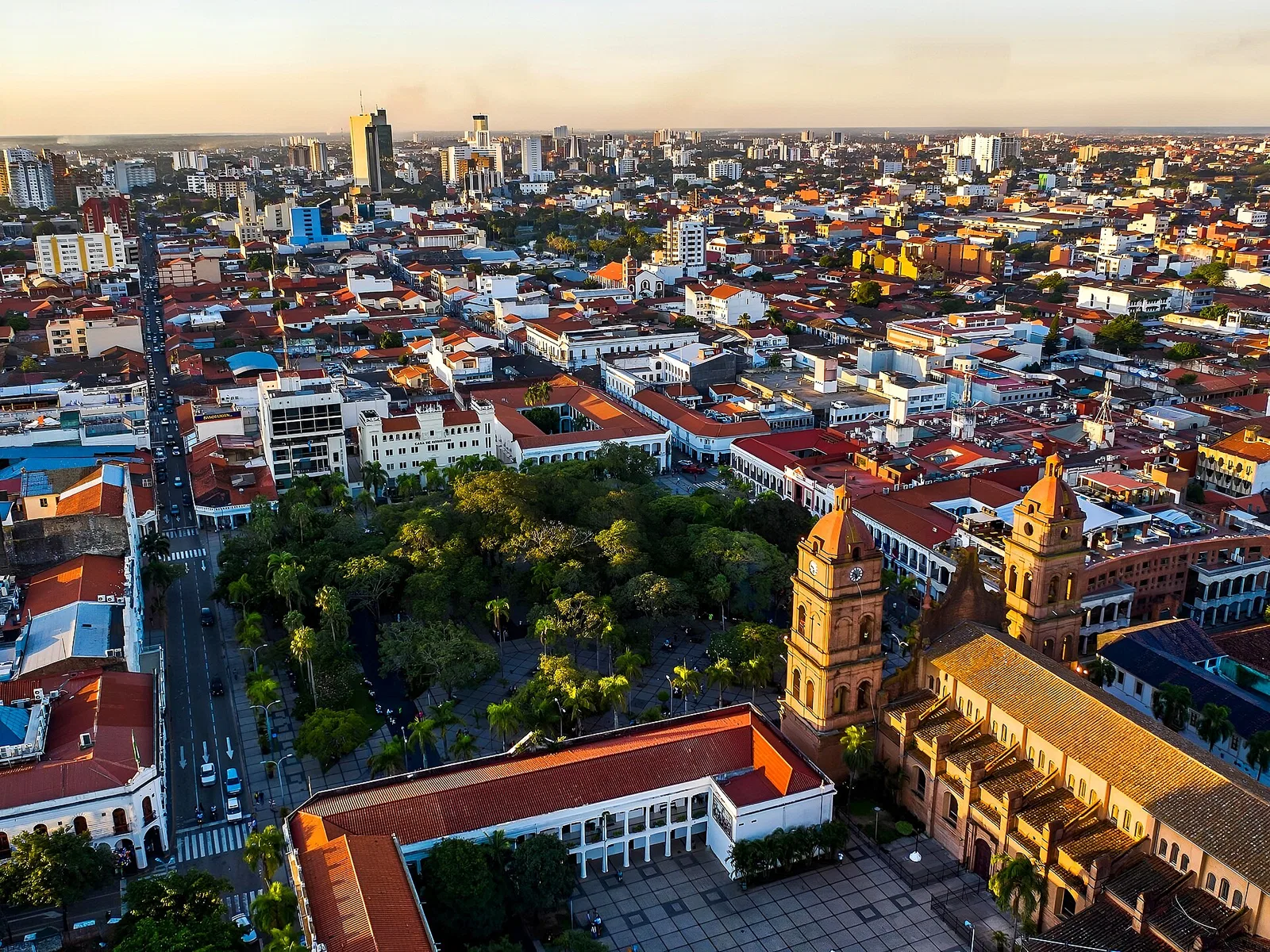
  • Santa Cruz de la Sierra, Bolivia
    Parallelepiped09 · CC BY-SA 4.0
    City

    Santa Cruz de la Sierra

    Come for contrast. After the altiplano, the heat, palms, late dinners, market life and camba cooking make it clear that the east is not an appendix but another centre of gravity.

    Tip: Worth a full day in its own right; it also works well as a base for Samaipata or the Jesuit mission towns if you have longer.

Eat

What to eat in Bolivia

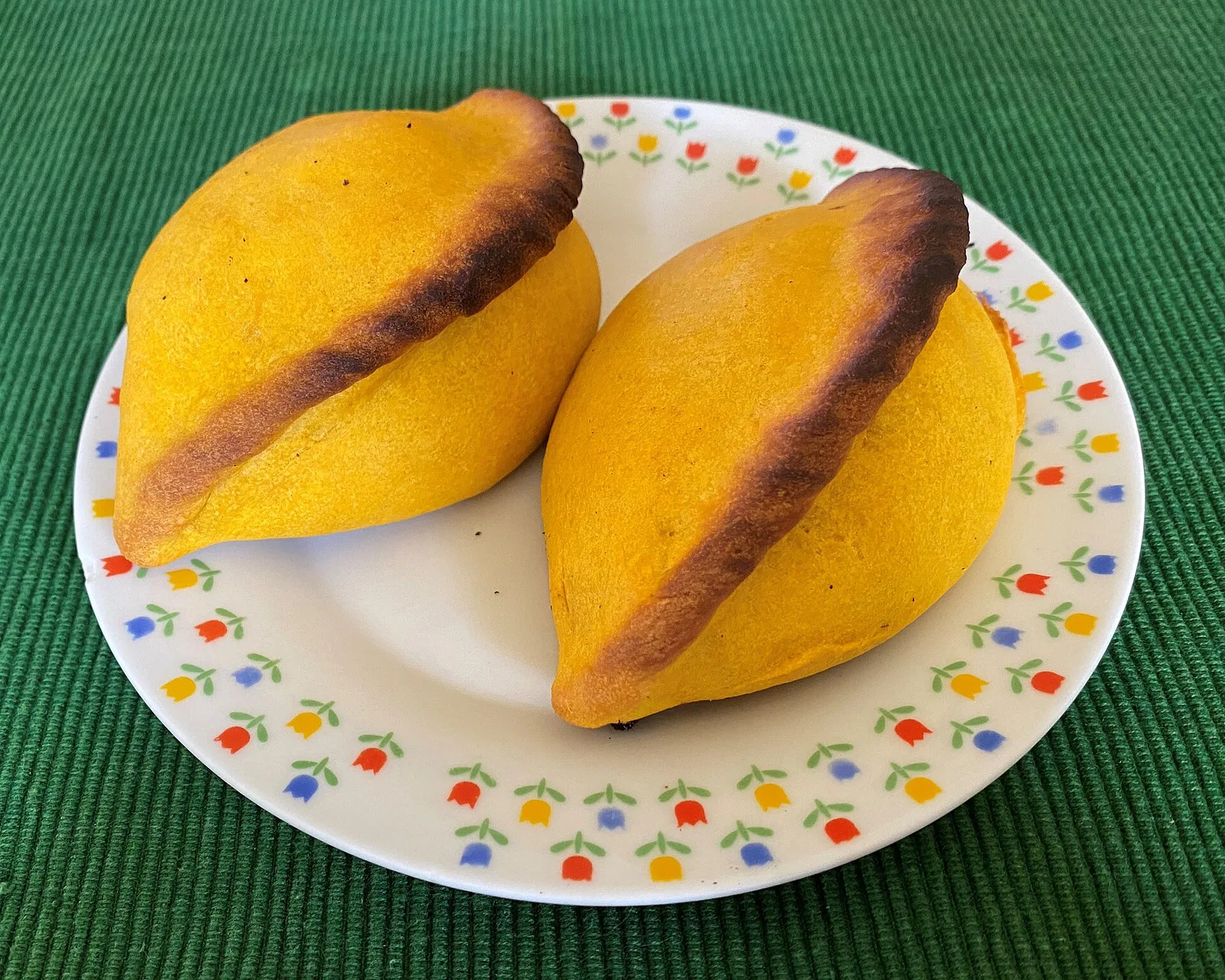
  • Salteña — Bolivia
    EEJCC · CC BY-SA 4.0

    Salteña

    A baked pastry filled with a sweet-savoury stew of beef or chicken, potato, peas, egg, olives and a lot of broth.

    Where: Mid-morning at a salteñería or small street counter; locals usually eat them before noon, often standing.

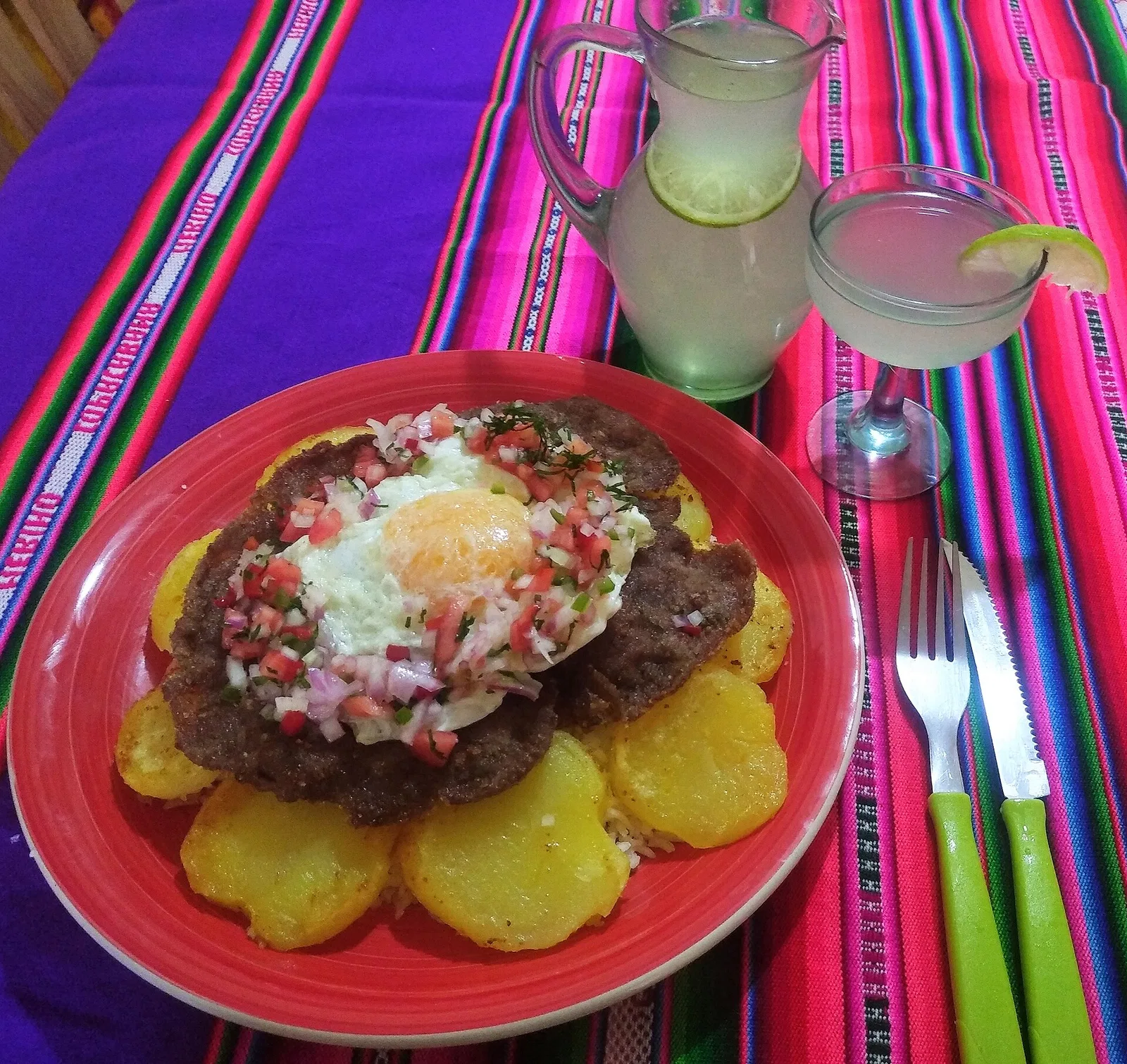
  • Silpancho — Bolivia
    Malu Alanoca · CC BY-SA 4.0

    Silpancho

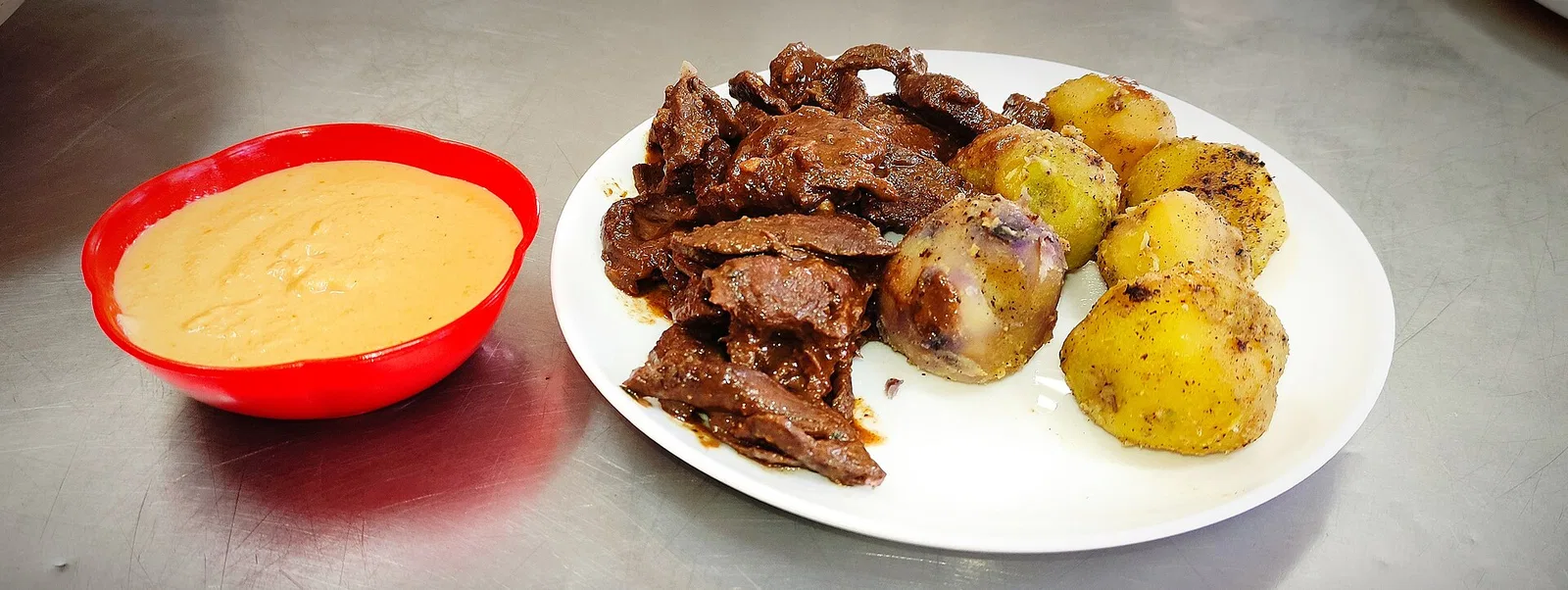
    Rice, potatoes and a very thin breaded beef cutlet, topped with a fried egg and tomato-onion-locoto salsa.

    Where: At lunchtime in Cochabamba market comedores and family restaurants.

  • Majadito — Bolivia
    Parallelepiped09 · CC BY-SA 4.0

    Majadito

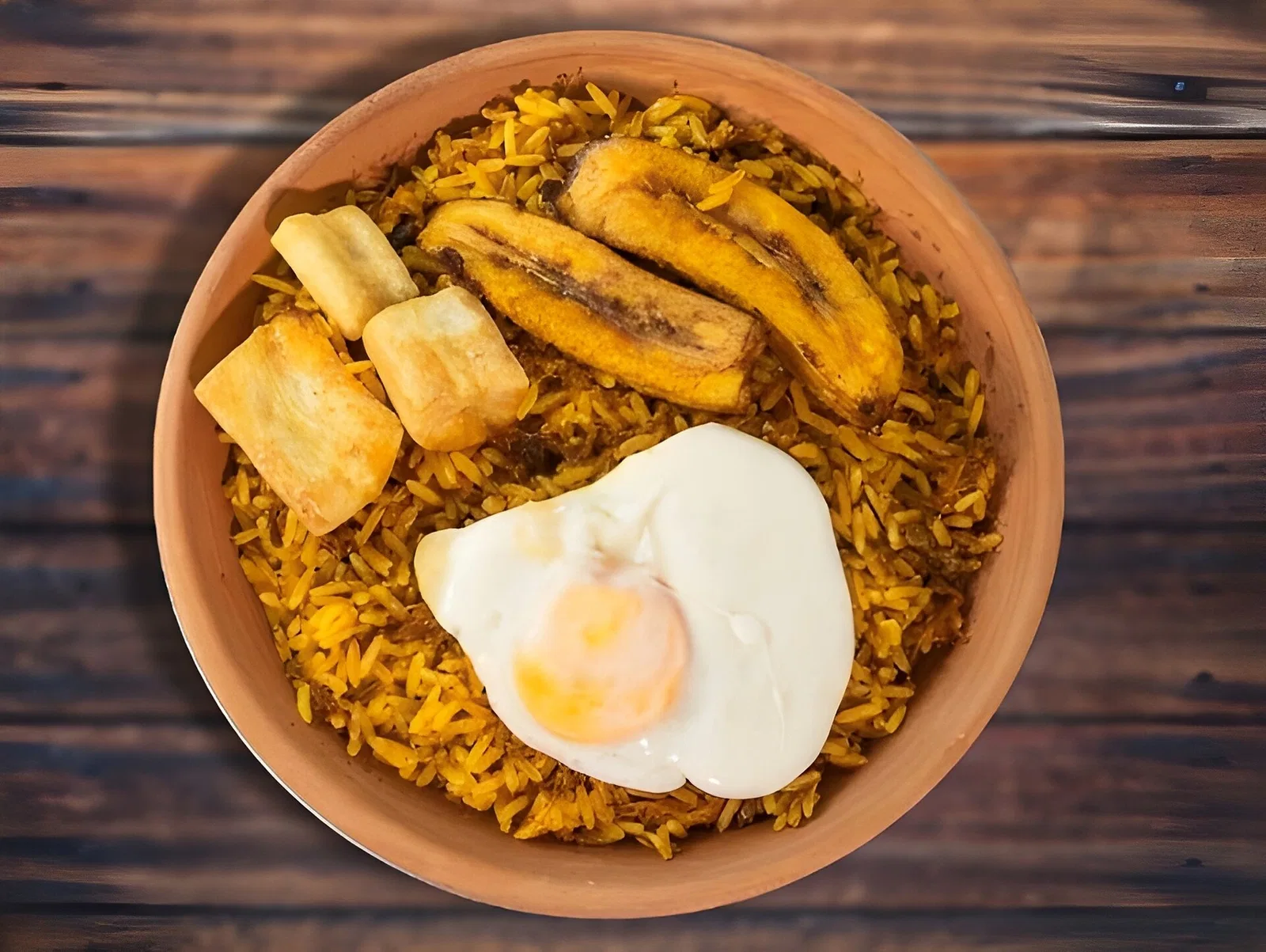
    Rice cooked with dried beef or duck and annatto, usually served with fried egg and plantain.

    Where: At lunchtime in Santa Cruz markets and home-style eateries.

Story

The story, in three chapters

At dawn in La Paz, trufi callers lean out of shared taxis shouting neighbourhood names while the air smells of diesel and frying buñuelos. By mid-morning, office workers are eating salteñas over the sink so the broth does not hit their sleeves. Then a cable car carries you up over the brick bowl to El Alto, and the place stops being abstract.

  1. Chapter 1

    Stones before empire

    At Tiwanaku, near Lake Titicaca, huge stones stand in the cold morning light as if the masons have just stepped away. Long before the Spanish, this was a centre of power, ritual and long-distance trade. When it faded, Aymara lordships held the high plain in rival pieces, with llama caravans moving salt, wool and coca between ecological worlds. Then the Inca came south, laying roads and storehouses that stitched the Andes into empire.

  2. Chapter 2

    The mountain that paid

    In 1545 Cerro Rico above Potosí began pouring silver into the Spanish Empire. In the 1570s Viceroy Francisco de Toledo made draft labour the engine of the place, and the mountain pulled in merchants, priests and miners from far beyond the Andes. Coins struck here crossed oceans to Europe and Asia. The wealth travelled. The lung damage, cave-ins and mercury stayed on the mountain.

  3. Chapter 3

    A state renamed

    Before dawn on 22 January 2006, Evo Morales went to Tiwanaku and received a staff of office from Aymara spiritual leaders. The image mattered. In 2009 the constitution recast the country as a plurinational state, the Wiphala moved onto public buildings, and politics around gas, lithium, land and regional power only grew sharper. The old argument about who rules, and in whose language, did not end; it became impossible to ignore.

Say hello

Say it like a local

  • Jallalla

    A cheer of blessing or approval: roughly "long live" or "may it go well."

    Say: hah-YAH-yah

  • ¿Me da una yapita, caserita?

    Can you throw in a little extra?

    Say: meh dah OO-nah yah-PEE-tah kah-seh-REE-tah

  • ¿Dónde pasa el trufi para el centro?

    Where do I catch the shared taxi into the centre?

    Say: DON-deh PAH-sah el TROO-fee PAH-rah el SEN-troh

  • Sin llajwa, por favor.

    Please leave off the hot salsa.

    Say: seen YAH-wah por fah-VOR

  • Estoy con soroche.

    The altitude is getting to me.

    Say: es-TOY kon soh-ROH-cheh

Surprises

Things you did not know

  1. The clock on the Legislative Assembly building in La Paz runs backwards. The numerals are reversed too; it was reset that way in 2014 as a prompt to look south, not north.

  2. Spanish has the expression "vale un Potosí" for something worth a fortune. It comes from the silver mountain that made the city's name shorthand for wealth across the empire.

  3. La Paz employs zebra-suited traffic educators called Cebras. Since 2001 they have used dance, mime and whistle-blowing to coax drivers and pedestrians into behaving at crossings.

Quiz

One question

At Alasitas in La Paz, what do people buy in miniature?

3 days

3 days in Bolivia

  1. Day 1

    La Paz from above

    Morning around Plaza Murillo and San Francisco in La Paz, afternoon riding Mi Teleférico up to El Alto and back, evening for salteñas and anticuchos in Sopocachi.

  2. Day 2

    Stones and shoreline

    Leave La Paz early for Tiwanaku, continue to Copacabana after lunch, and spend the evening by Lake Titicaca instead of rushing back.

  3. Day 3

    Isla del Sol walk

    Take the morning boat to Yumani on Isla del Sol, walk the ridge paths and Inca steps, then return to Copacabana or La Paz by evening.

At a glance

Bolivia: know before you go

Best time to go
May to October for dry skies on the altiplano and easier road travel; January to March if the Uyuni mirror matters most.
Budget
LowMeals, buses and simple rooms are cheap by global standards, but salar tours and internal flights change the math fast.
Etiquette
Say buenas before jumping into a question, especially in markets. Ask before photographing anyone in traditional dress; many women in polleras are tired of being treated as scenery.
Safety
Altitude is the thing most visitors actually feel, especially in La Paz and around Titicaca, so keep the first day light. Also leave slack in overland plans: protests and road blockades can stop buses with little warning.

At a glance

Capitals
Sucre · La Paz
Population
12,244,159
Area
1,098,581 km² · 424,164 sq mi
Languages
Spanish, Aymara, Quechua, Guarani
Currency
Bolivian Boliviano (BOB)
Time zone
UTC−04:00, America/La_Paz
Calling code
+591
Drives on the
Right
Internet domain
.bo
Landlocked
Yes
More facts
Continent
AMERICAS

Member of

  • United Nations

Neighbouring countries

Listen

Listen & watch

The song of the day

Llorando se fue

Los Kjarkas

Because a melody from Cochabamba became part of the world's pop memory, but at home it still belongs to Los Kjarkas first.

Play a 30-second preview30-second clip via Apple Music

Before you go, watch or read

También la lluvia

Film

It opens up how colonial memory and the Cochabamba water protests can sit inside the same story.

Entry requirements

Bolivia visa requirements

Bolivia entry requirements by passport: of 197 passports, 65 can enter without a visa, 120 get a visa on arrival, 7 apply online before they travel and 5 need a visa from an embassy or consulate.

Ask 22 travelers who've been to or live in Bolivia

Members who've been there or live there answer questions about costs, safety, getting around and what to expect.

Free to join. Your question goes to members who've been to or live in Bolivia.

Join free and ask

Safety

Bolivia safety: is it safe to visit?

Level 2 of 4Exercise Increased Caution

Due to civil unrest and crime

US State Dept, updated September 20, 2025. Advisories change: check your own government's travel advice before you go.

From the community

Places travelers recommend in Bolivia

Ask the community

Questions about Bolivia

No questions yet. 22 members here know Bolivia.

From the community

Trip stories from Bolivia

Countries

🇧🇴 Today's country is Bolivia. A navy without a coastline still trains on Lake Titicaca. At dawn in La Paz, trufi callers lean out of shared taxis shouting neighbourhood names while the air smells of diesel and frying buñuelos. By mid-morning, office workers are eating salteñas over the sink so the broth does not hit their sleeves. Then a cable car carries you up over the brick bowl to El Alto, and the place stops being abstract. 📍 Places to visit • Salar de Uyuni — People come for scale…

Join Xplorians to react, save and comment

Questions

Bolivia: frequently asked questions

Bolivia visa: do I need one?
Bolivia entry requirements by passport: of 197 passports, 65 can enter without a visa, 120 get a visa on arrival, 7 apply online before they travel and 5 need a visa from an embassy or consulate.
Bolivia: is it safe to visit?
US State Dept rates Bolivia at level 2 of 4. Exercise Increased Caution: Due to civil unrest and crime.
Bolivia: when is the best time to visit?
May to October for dry skies on the altiplano and easier road travel; January to March if the Uyuni mirror matters most.
Bolivia: what currency is used?
Currency in Bolivia: Bolivian Boliviano (BOB).
Bolivia: what language do people speak?
Languages of Bolivia: Spanish, Aymara, Quechua, Guarani.
Bolivia: what is the capital?
The capital of Bolivia is Sucre · La Paz.

Travel guide

In the community

22 travelers30 trips6 want to go

5.0(19 ratings)

See who has been there and what you need to travel.

Join the community

Track the countries you have visited and meet travelers who have been there.